The EU targets Guinea for visa punishment: a sign of what's to come
Topic
Country/Region
24 February 2026
On 15 July 2025, the European Commission proposed punitive visa sanctions against Guinea, marking an escalation in its campaign to force third countries to cooperate on deportations. This move, based on Article 25a of the EU Visa Code, cites Guinea’s persistent “failure to cooperate sufficiently” with the EU’s deportations agenda. It is emblematic of the coercive diplomacy the EU is willing to resort to, even if the results of such coercion are unclear.
Support our work: become a Friend of Statewatch from as little as £1/€1 per month.
 Image: Kurt Cotoaga
Researched and written by Cezary Dziółko.
In recent years, the European Union has attempted to pressure poorer and less powerful countries into accepting back more of their citizens deported from Europe. One of the main tools the EU has used for this is an obscure legal mechanism called Article 25a. Part of the EU’s visa laws, Article 25a can be used to limit non-EU citizens’ access to tourist and other visas in the EU’s Schengen zone. The idea is to ‘punish’ the citizens of a country for their government’s lack of cooperation on deportations. In mid-2025, the European Commission proposed using this tool against Guinea, a country in West Africa with a population of around 14 million.
The proposed Council Implementing Decision, if adopted, would suspend ‘visa facilitation measures’ for most Guinean nationals, meaning visas would be more difficult and expensive to get, and processing times would be longer.
This is one of several times the Article 25a mechanism has been used specifically for deportation ‘failures’. It was used against The Gambia in 2021 and Ethiopia in 2024.
The efforts the EU has made to pressure Guinea shows the kind of double-strategy that Europe appears intent on using in the future. This strategy aims to increase deportations and also reduce irregular migration.
In recent years Guinea has become a major new point of departure for migrants on the perilous ‘Atlantic route’ between West Africa and the Spanish Canary Islands. This appears to be at least in part because of increased EU-backed border control around Senegal and Mauritania. The EU has various migration programs worth millions of euros in Guinea, and much of this spending appears to be aimed at cutting off this ‘emerging route’. Many of the objectives of these programs are tied to Guinea’s border and police forces, including enhanced “investigative and intelligence capacities”.
Guinea’s supposed lack of “cooperation”
A 2022 European Commission overview of deportation cooperation with non-EU countries had already remarked Guinea’s poor ‘performance’ in this regard. ‘Return rates’ were as low as 2-3% in 2019 and 2020 – this means that of all the Guineans who were issued deportation orders in the EU, only a small fraction were actually deported.
Following a coup d'etat in Guinea in late 2021, the EU wanted a “re-examined political engagement” on the matter of deportations. They tried to hold more talks with the government of Guinea. Despite these efforts, according to the European Commission, Guinea’s cooperation has only worsened since 2023. High-level political meetings were held in Conakry and Brussels, including with Guinea’s Foreign Minister, Interior Minister, and Prime Minister, but this apparently failed to secure the commitments to “concrete actions” the EU wanted.
One of the main issues is the EU wants Guinea to issue more travel documents for people to be deported, which is an important part of the process. The Commission complained of “significantly decreasing quality of cooperation” in this regard, even though the EU is no doubt aware of the extremely low level of citizenship and identity documentation among Guinean citizens.
The Commission also argues that Guinea’s non-cooperation violates commitments it made as part of other global agreements, such as the Samoa Agreement.
Just a few years on from the start of this “re-examined political engagement”, the threat of Article 25a sanctions signals the end of diplomatic patience.
Article 25a’s template for coercion and what it means for Guineans
If adopted by the Council, the Article 25a implementing decision will make Schengen visa applications for Guinean nationals much hard to get, by suspending four key provisions.
This would result in:
-
Stricter documentation procedures: where previously member states could waive certain documentation requirements, a full set of supporting documents will be required for every application
-
No diplomatic privileges: an optional visa fee waiver will be revoked for diplomatic and service passport holders, meaning government officials will have to pay the full €90 fee
-
Longer processing: The standard 15-day visa processing time will be suspended. The new extended period is up to 45 days.
-
Single-entry only: Multiple-entry visas will be suspended. In principle, only single-entry visas will be granted.
These measures would not apply to family members of EU citizens, and those with similar rights to free movement in the EU’s Schengen zone.
The proposal document is clear that if Guinea does not increase its ‘cooperation’, the EU will trigger a “second stage” of the Article 25a mechanism. This would mean an increase in visa fees for Guinean nationals to €135 or €180. The Gambia was subjected to this, but eventually relieved after being judged more cooperative in 2024.
Visa sanctions: just one part of the EU’s anti-migration agenda
All of this must be seen within the context of the Pact on Migration and Asylum. The Pact, adopted in 2024 and now in its implementation phase, urges “the full range of the EU’s and Member States’ policies, tools and instruments” be used to get more deportation cooperation. In practice, this means the Commission intends to threaten restricting development aid, trade and visas.
In pursuit of its deportation aims, the EU’s visa sanctions approach has become systematic. The 2022 readmission cooperation overview cited above notes that Bangladesh, previously threatened with sanctions, had avoided them only after they began cooperating more. Iraq appears to have escaped sanctions for the same reason, and a recent document published by Statewatch notes “sustained and positive cooperation” from both countries. These results demonstrate the mechanism’s intent — a threat, and then if cooperation does not improve, punishment.
Limits to the threat of visa sanctions
Speaking to the European Parliament’s Committee on Civil Liberties, Justice and Home Affairs on 26 January 2026, senior Commission official Johannes Luchner suggested that even just the threat of Article 25a sanctions seems to have a strong effect. Speaking about Ethiopia, Bangladesh and Iraq, among others, Luchner said “the progress observed with most of the third countries concerned shows that the mechanism is indeed effective in enhancing readmission cooperation”.
Luchner also acknowledged, however, that in other cases, such as Senegal and Somalia, Article 25a threats alone do not seem to have the desired effect. This seems to be the case with Guinea as well.
Luchner told parliament that though there has been “strong political commitment” from Guinea since sanctions were threatened in July 2025, that commitment was still yet to “translate into operational reality”. That is to say, Guinea has not increased its deportation cooperation.
This matter was discussed by EU member state delegations at the Council’s Visa Working Party meeting of 19 September 2025, where the Article 25a strategy is often discussed. Statewatch asked the Commission about visa sanctions against Guinea, and a spokesperson confirmed that actual visa punishment has not yet been implemented. This suggests possible disagreement among member states over whether the threat should actually be carried out.
Weaponising EU visa policy: the new standard practice
While it is not clear that Article 25a visa punishments, or threats, always ‘work’, EU member states are demanding that they be used more, motivated by a desire to deport more people from Europe.
In a recent document obtained by Statewatch, delegates from France, apparently speaking on behalf of other member states as well, argued for much wider use of Article 25a sanctions to pressure third countries into cooperation. The letter complained that only The Gambia and Ethiopia have been subjected to actual sanctions so far.
The intended message to partner countries is clear: cooperation on readmission is a non-negotiable condition for a smooth relationship. The EU will use all its tools of punishment if sovereign countries refuse to cooperate. The process of systematic review, diplomatic exchange and threat of punishment applied to Guinea, as well as to Ethiopia and The Gambia before it, is a template ready for the EU to use against other countries if they want to.
Our work is only possible with your support.
Become a Friend of Statewatch from as little as £1/€1 per month.
Further reading

Schengen borders: more deportations, surveillance and militarisation in the works
An internal EU report obtained by Statewatch offers an update on efforts to strengthen border and immigration controls in the Schengen area in the first half of 2025. The report reflects a desire to step up the anti-migrant policy agenda pursued by European policymakers in recent years – more deportations, more surveillance and more militarisation of borders.
EU to increase lethal migration cooperation with Libya
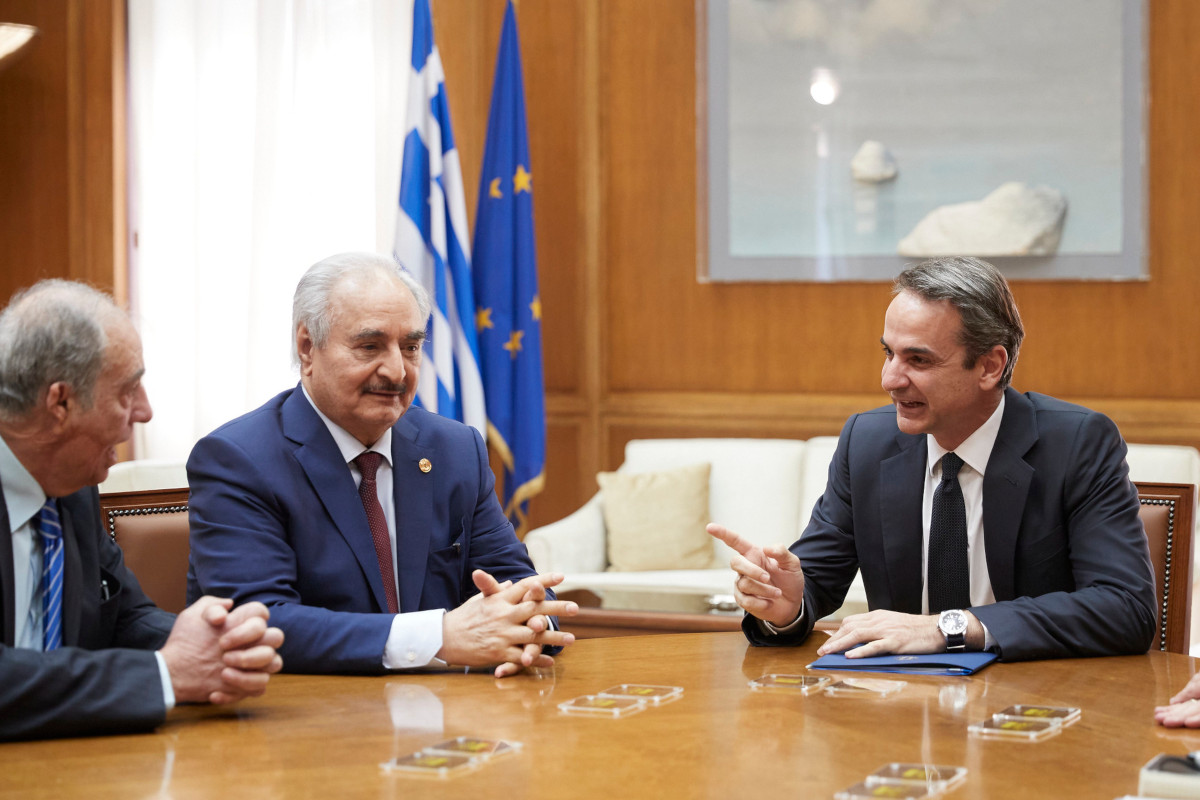
The EU is set to fund migration control infrastructure in the eastern region of Libya, a move that will increase cooperation with general Khalifa Haftar, once a pariah to western states. The plan to extend EU cooperation into eastern Libya comes despite long-standing condemnation of Libyan and EU involvement in human rights abuses, shooting at NGO vessels, and accusations of crimes against humanity.

Border externalisation: "new and innovative" solutions for migration control
The latest issue of our bulletin on EU border externalisation policies includes: plans to pay third countries to intercept and detain irregular migrants, an update on visa sanctions as leverage for deportation cooperation, a new EU-funded pullback coordination centre in Eastern Libya and the EU's partnership with the Taliban for deportations
Spotted an error? If you've spotted a problem with this page, just click once to let us know.