Swiss government urged to rethink mass telecoms surveillance plan
Topic
Country/Region
05 February 2026
The Swiss government should halt its plans to extend the widespread surveillance of telecommunications, says a letter signed by 19 organisations including Statewatch. The country’s federal government is planning to revise a law that obliges telecoms companies to retain data about users, in case it is of interest to the police. The letter warns this would violate rights, run counter to European jurisprudence, and create huge cybersecurity risks.
Support our work: become a Friend of Statewatch from as little as £1/€1 per month.
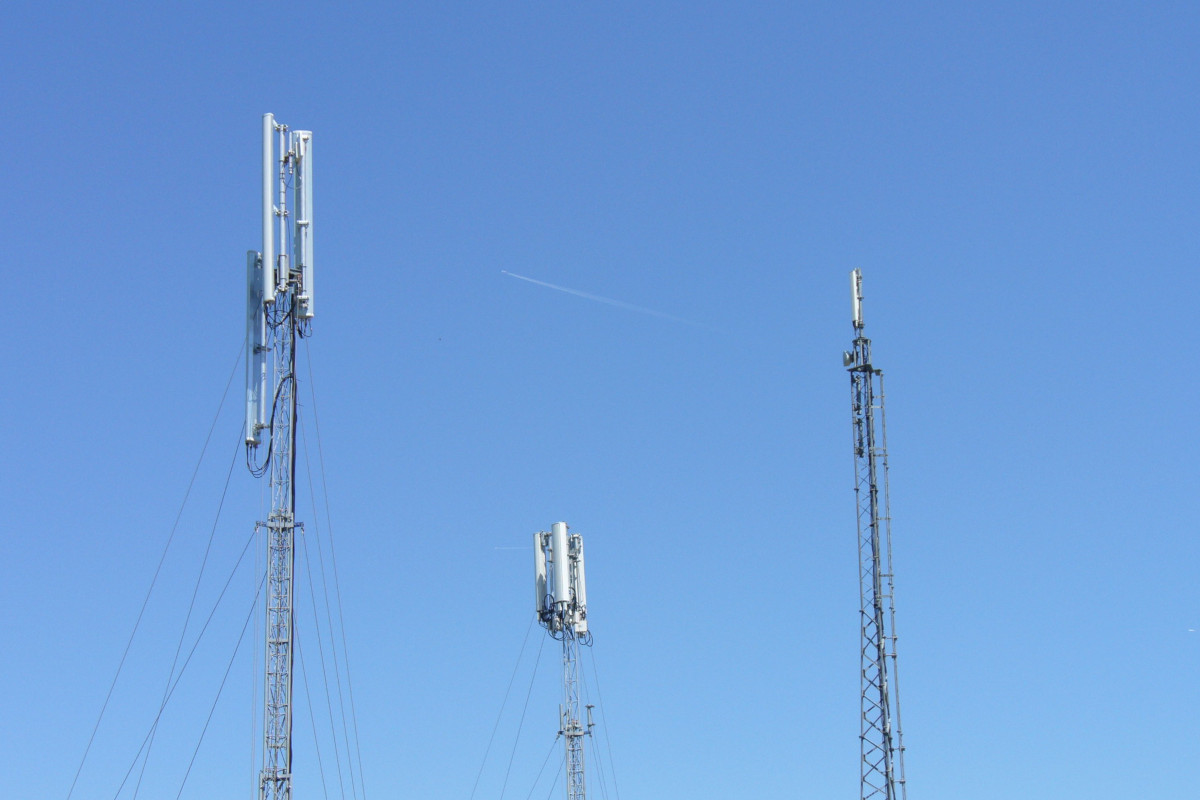 Image: Clive D, CC BY-SA 2.0
This letter was coordinated by European Digital Rights.
Dear Mr. Federal Councilor Jans,
We, the undersigned human and digital rights organisations, would like to share our serious concerns regarding to the extension of general and indiscriminate retention of telecommunications and internet traffic data as part of the revision of the Swiss Ordinance on the Surveillance of Post and Telecommunications Traffic (VÜPF).
We urge you to amend the proposed Ordinance substantially for the following reasons:
1. Violation of the fundamental rights to privacy and data protection
As the Swiss Federal Supreme Court has rules, the case law of the Court of Justice of the European Union (CJEU) on privacy and data protection is relevant to Switzerland.[1] In declaring the EU Data Retention Directive (Directive 2006/24/EC) invalid in 2014, the CJEU holds that the general and indiscriminate retention of communications data by electronic communications service providers constitutes a disproportionate interference with the rights to data protection and privacy, guaranteed in Articles 7 and 8 of the Charter of Fundamental Rights.[2] The reason mass data retention is incompatible with European legal principles is that it targets the entire population, without differentiation or concrete suspicion of criminality. Furthermore it severely undermines the principle of confidentiality of communications, which is especially important in today’s context of very widespread use of electronic communication means and their critical importance in people’s everyday lives.
The proposed Ordinance, which significantly extends the obligation of metadata retention for large communications service providers[3] and imposes user identification requirements on virtually all service providers[4], would dramatically increase the amount of personal data retained and thus, further intensify the (already serious) interference with the right to privacy and data protection. Such level of surveillance is unacceptable in a democratic society.
2. Chilling effect on the exercise of other rights and freedoms
The CJEU has rightly described general and indiscriminate data retention as being likely to generate in the minds of the population the feeling of being under constant surveillance. This creates a climate of self-censorship. In addition to the expanded data retention regime, the draft Ordinance also imposes an obligation on most service providers in scope to “identify” their users “by appropriate means”.
The lack of a forum to enjoy secure, private and anonymous communications free from government scrutiny chills people’s exercise of freedom of speech, freedom of thought, and freedom of assembly and association. These fundamental rights are essential foundations of a pluralist, democratic society and vitally important for journalists, lawyers, human rights defenders and activists. The chilling effect generated by mass data retention and mandatory identification erodes democratic discourse and civic participation, at a time where they are direly needed.
3. Incompatibility with the European Convention on Human Rights (ECHR)
Switzerland, a party to the European Convention on Human Rights, is also bound by the jurisprudence of the European Court of Human Rights (ECtHR), which has consistently ruled that surveillance regimes constitute an interference in the right to privacy, and so must be comply with the principles of necessity and proportionality to be compatible with the Convention. They must include adequate protection against arbitrariness such as substantive and procedural safeguards, including substantive and procedural rules governing access to data and independent oversight mechanisms. .
The draft Ordinance would substantially weaken the legal protections against arbitrary or abusive law enforcement access to personal data: it allows access to subscriber information and IP addresses without prior authorisation by a court and mandates the automatic execution of law enforcement access requests, i.e. data disclosure without the intervention of service providers. This would be contrary to the ECtHR case-law (see Benedik v Slovenia[5]) which requires that national legislation offers sufficient safeguards against arbitrary interference with the rights guaranteed by Article 8 of the European Convention on Human Rights (ECHR).
4. Risk posed to Switzerland’s adequacy status with the EU
Switzerland’s current legislation, mandating the general and indiscriminate retention of all traffic and location data, already appears incompatible with EU privacy and data protection law, as per the CJEU’s settled case-law (notably Digital Rights Ireland[6], Tele2 Sverige[7], La Quadrature du Net[8] and subsequent cases).
The increased level of surveillance proposed by the draft Ordinance would further weaken the level of adequate protection and increase the gap with EU standards. As per Article 3a (3) and (4) of Commission Implementing Decision 2016/2295[9], “if interferences by Swiss public authorities responsible for national security, law enforcement or other public interests with the right of individuals to the protection of their personal data go beyond what is strictly necessary, or that there is no effective legal protection against such interferences”, Switzerland’s adequacy status could be called into question.
5. Cybersecurity risks
An obligation put on almost all internet service providers to retain sensitive data of all their users creates huge security risks. Cyberattacks targeting the tele- and electronic communications sector are on the rise and impact the online safety and privacy of millions of people across the world, but also business and public administrations.[10] The draft Ordinance would increase the amount of data subject to such data breaches.
6. Existence of less intrusive alternative measures
Any interference or limitation on the exercise of the rights and freedoms created by data retention requirements must be deemed necessary, meaning that if other less intrusive measures exist and can reasonably achieve the same objectives, the measure at stake cannot be considered necessary and therefore lawful. Yet, independent studies have consistently failed to establish that indiscriminate data retention contributes in a meaningful way to crime prevention and prosecution compared to targeted retention.
Preservation orders ("quick-freeze"), issued under judicial control, can provide law enforcement with access to necessary information for a specific investigation without subjecting the entire population to mass surveillance.
In light of the above, we urge you to abandon any proposals for wide-ranging, blanket data retention obligations, privacy-effacing identification obligations, weakening of crucial legal safeguards and automatic data disclosures in the revision of the VÜPF Ordinance. We recommend instead to align the Swiss legislation with the highest standards of protection set by both the Court of Justice of the European Union and the European Court of Human Rights.
We remain available to answer any question you may have and trust that together, we can find rights-respecting solutions to legitimate public interest objectives.
Sincerely,
AlgorithmWatch (Germany)
AlgorithmWatch CH (Switzerland)
Amnesty International Switzerland
Bits of Freedom (Netherlands)
Digitalcourage (Germany)
Digitale Gesellschaft (Switzerland)
Digitale Gesellschaft (Germany)
Electronic Frontier Norway
epicenter.works – for digital rights (Austria)
European Digital Rights (EDRi) (International)
Homo Digitalis (Greece)
Human Rights Watch (International)
Initiative für Netzfreiheit (Austria)
Internet Society - ISOC Switzerland Chapter
IT-Pol (Denmark)
Liga voor Mensenrechten (Flemish Human Rights League) (Belgium)
Open Data CH (Switzerland)
Privacy International (International)
Statewatch (International)
Notes
[1] in BGer 1C_598/2016, E. 8.2.2.
[2] Judgment in Joined Cases C-293/12 and C-594/12, Digital Rights Ireland and Seitlinger and Others, Luxembourg, 8 April 2014.
[3] Over-the-top service providers classified in the highest tier (1 million users or annual turnover above 100 million CHF)
[4] Service providers with more than 5,000 users
[5] https://hudoc.echr.coe.int/fre#{%22itemid%22:[%22001-182455%22]}
[6] https://curia.europa.eu/juris/document/document.jsf?text=&docid=150642&pageIndex=0&doclang=EN&mode=lst&dir=&occ=first&part=1&cid=2255180
[7] https://curia.europa.eu/juris/document/document.jsf;jsessionid=9ea7d2dc30d573c52441e12b44d0a94dfc5b5bdfc5ce.e34KaxiLc3qMb40Rch0SaxyKbN90?text=&docid=186492&pageIndex=0&doclang=en&mode=lst&dir=&occ=first&part=1&cid=165644
[8] https://curia.europa.eu/juris/document/document.jsf?text=&docid=232084&pageIndex=0&doclang=EN&mode=lst&dir=&occ=first&part=1&cid=2421304
[9]Which require https://eur-lex.europa.eu/legal-content/EN/TXT/?uri=celex%3A32016D2295
[10] https://therecord.media/eight-telcos-breached-salt-typhoon-nsc https://www.computing.co.uk/news/2025/security/salt-typhoon-caught-hacking-a-european-telco-says-darktrace
https://wisdiam.com/publications/recent-cyber-attacks-telcos/
Our work is only possible with your support.
Become a Friend of Statewatch from as little as £1/€1 per month.
Further reading

Policing by design: the latest EU surveillance plan
The EU should reintroduce mass telecommunications surveillance and create backdoors to encrypted data, a new plan drafted in secret by police and security officials says. To do so, close coordination between the state and industry would be required, to ensure what the plan calls “lawful access by design.” The plan repeats demands made many times over the years by officials, and may find a warm reception from the incoming European Commission.
"Going dark": will the next assault on privacy take place behind closed doors?
The Swedish Presidency of the Council proposed to create a High-Level Expert group on data retention to strike a new "balance" between the right to privacy and the right to security, according to two documents published by Statewatch. Member state feedback has been enthusiastic. The aim is to change the rhetoric on surveillance to facilitate the adoption of new rules. The expert group format of discussion and the participation of civil society are still to be decided, with the Commission and the Council likely to co-chair.
EU: Data retention strikes back? Options for mass telecoms surveillance under discussion again
In June 2021 the European Commission sought the views of member states on ways to reintroduce the bulk retention of telecoms traffic, location and internet connection data on everyone in the EU. Responses from seven member states, published here, show a divergence of views on what data to retain and when, but a majority in favour of new EU legislation.

Spotted an error? If you've spotted a problem with this page, just click once to let us know.