EU member states want to expand police surveillance of travel
Topic
Country/Region
15 January 2026
In the name of fighting crime and terrorism, EU law requires mandatory police surveillance of international air travel. Governments are now considering surveillance of all other modes of transport, in particular maritime travel. They also want to use data for new purposes, such as immigration control. A working group has been set up to consider new legal proposals.
Support our work: become a Friend of Statewatch from as little as £1/€1 per month.

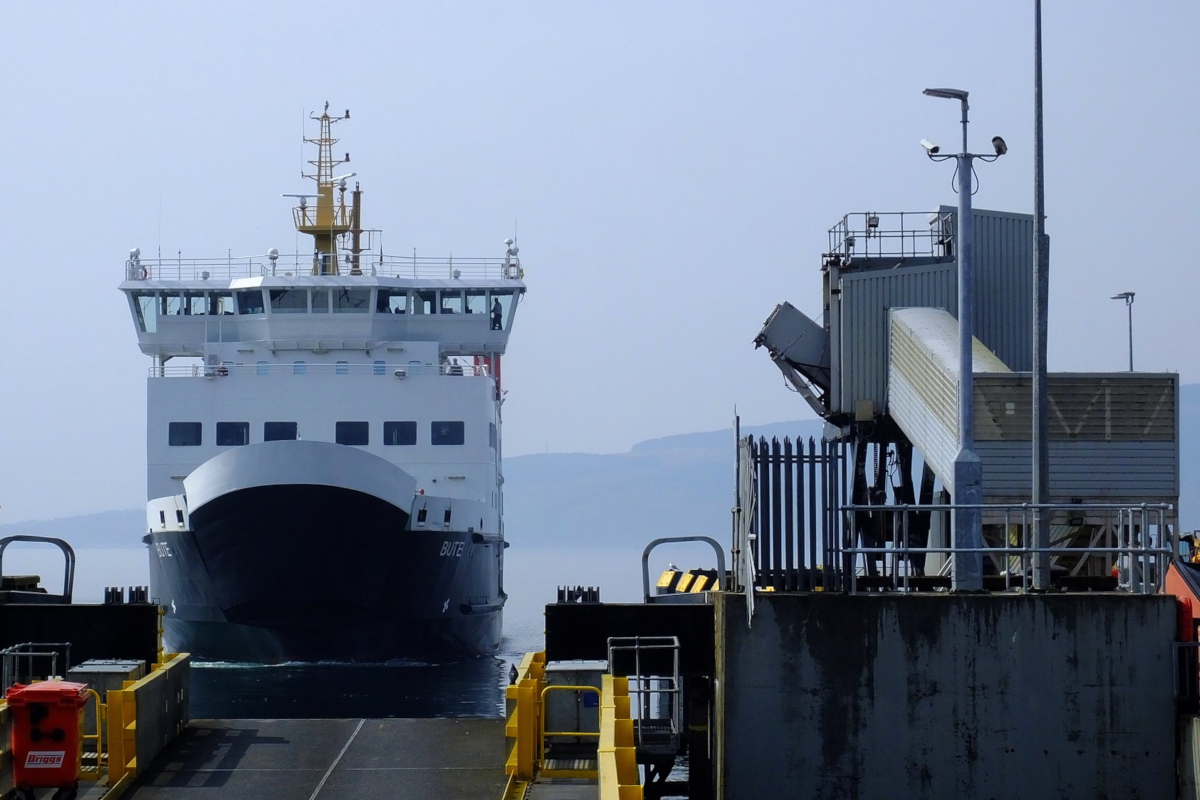
Image: Mike Norton, CC BY 2.0
Surveillance of air travel
Since 2016, an EU law known as the Passenger Name Record (PNR) Directive has required airlines to send passenger data to police forces.
They then check the information against databases and process it using algorithms to determine if someone is wanted, or might be a ‘person of interest’.
The data transmitted to police by airlines includes:
- names;
- flight information;
- address;
- travel itinerary;
- payment information;
- baggage information; and
- in-flight meal choices.
Governments may combine this with other types of data. In 2015, the Spanish government published proposals (pdf) for combining PNR data with information from open sources, “principally social networks.”
More recently, the US government has announced plans to collect social media data, amongst other things, from visitors to the country. This would then be combined with PNR and other data to create individual traveller profiles.
Find out more about global travel surveillance policies from our project Networks of (In)security
Three travel surveillance priorities
A discussion paper circulated by the Danish presidency of the Council of the EU in September (pdf) proposed three priorities for the EU’s “travel information policy”:
- moving ahead with discussions on collecting data on maritime passengers;
- getting rid of limits that only allow the use of travel data to investigate serious criminal offences (referred to in the document as “operational and practical issues”); and
- making sure new travel surveillance measures are in line with member state demands.
New working group on surveillance of maritime travel
The Danish presidency proposed discussions on new EU rules to give law enforcement agencies access to “maritime travel information already collected and transferred by operators at national level.”
This is despite the fact that “several” governments have “a clear preference for consolidating the existing framework before developing it further towards other modes of transport,” according to the presidency.
Only “some” think new surveillance rules for maritime transport are a priority, the document says.
The note proposed a new working group to take these ideas forward, made up of “interested delegations”, Council presidencies, the Council’s General Secretariat and the European Commission.
A concept note on this proposed group was circulated in December, but its contents remain unknown.
Alongside maritime travel, the Danish presidency’s September note proposed that this new group discuss:
- long-distance rail transport;
- long-distance bus transport;
- ANPR (automated number plate recognition) systems, allowing for the surveillance of car journeys (pdf).
Discussions at EU level on maritime travel will build on international rules. In recent years, the International Maritime Organisation has led work to introduce new global standards for maritime passenger data, designed to support police monitoring of travellers.
Expanding travel surveillance
Member states have also held discussion on “challenges of operational or practical nature,” which they plan to solve with better quality data or “better techniques for data exploitation.”
What these techniques may be remains to be seen. A former UN Special Rapporteur condemned travel surveillance software distributed to states by the UN’s Countering Terrorist Travel Programme as “experimental,” noting that it:
…has never been subject to formal review in respect of its accuracy rate in identifying named individuals, much less the accuracy of its use in any risk-based profiling system.”
Germany’s federal criminal police (Bundeskriminalamt) received 548 million passenger name records in 2024, which led to 1,525 arrests – a rate of less than 0.0003%. Meanwhile, more than 67,000 people were flagged as potentially risky and searched, only for no further action to be taken.
The EU’s top court placed limits on how member states are able to use travel data in a 2022 judgement.
The Belgian Ligue des Droits Humains brought a court case arguing that Belgian measures implementing the 2016 PNR Directive were not in line with fundamental rights standards.
The court agreed, and in its judgment issued guidelines on how PNR data should be collected and used.
This included a requirement that member states could not introduce the blanket monitoring of all flights within the EU.
Instead, such monitoring should be limited to cases involving “terrorist offences and serious crime having an objective link, even if only an indirect one, with the carriage of passengers by air.”
Shortly after the judgment was handed down, the Council started discussing how to circumvent it. Last year, an EU data protection body highlighted that most member states have not taken any action to comply with it.
Further problems for member states may come from the multiple different databases and surveillance tools being they are setting up at the same time.
As well as PNR systems, member states and EU institutions are busy implementing tools for the biometric registration of people crossing borders, and a “travel authorisation” system that will see millions of people profiled by algorithms to determine the ‘risk’ they pose to the EU.
These systems, and many others, are all supposed to be interconnected as part of the EU’s ambitious “interoperability” agenda.
Member state requirements for new initiatives
The Danish presidency noted the European Commission should ensure any future proposals account for “the policy questions and caveats raised by member states.”
One of these is the possible use of “travel information beyond law enforcement (e.g. for border management, migration).”
Introducing a new legal basis for uses beyond criminal law would sidestep one of the requirements of the CJEU judgment – that PNR data only be used for investigating serious criminal and terrorist offences.
The UK has is one place where these kinds of experiments have already taken place.
Travel data collected by the Home Office was used to inform decisions on families’ welfare payments, but the data was “so flawed that almost half of the families initially flagged as having emigrated were still living in the UK.”
In France, a legal proposal discussed last December would allow the use of passenger name records to address benefit fraud, a move described by digital rights group La Quadrature du Net as a case of “blatant misuse of travel data.”
The Danish presidency also proposed that the Commission should consider the feasibility of new rules that are “transport-neutral”, rather than being directed at specific forms of transport.
A further request from member states is for “necessity and proportionality of any new initiatives and the need for solid impact assessments” (emphasis in original).
The Commission has frequently failed to carry out impact assessments on its own proposal for new laws, despite its own guidelines requiring it do so. In November, the European Ombudsman found that failure amounted to maladministration.
Further discussions
The topic of “travel information” was on the agenda of the Council’s Working Party on Justice and Home Affairs Information Exchange (IXIM) in November and December.
As noted above, the presidency circulated a concept note on its proposed working group in December, though the note has not yet been made public.
This summer the Commission is also due to publish its second evaluation of the PNR Directive, which may provide the backdrop for further demands to extend travel surveillance and passenger profiling rules.
Documentation
- Travel information: possible way forward (continued - 2) (Council doc. 13133/25, LIMITE, 25 September 2025, pdf)
Our work is only possible with your support.
Become a Friend of Statewatch from as little as £1/€1 per month.
Further reading

Networks of (in)security: how global counter-terrorism and security norms threaten civic space and human rights
Global counter-terrorism and security norms are propelling the introduction of pre-emptive, automated and algorithmic forms of surveillance and profiling, says new research published today by Statewatch. This is reinforcing racism and discrimination, inhibiting free movement, and giving authoritarian states new tools of control. The research calls for an organised response to this long-term state project, and sets out some guiding questions for future work.

UN travel surveillance system needs “pause and urgent review”, says Special Rapporteur
A UN Special Rapporteur has called for a pause to the roll-out of an UN-sponsored travel surveillance system, and for an urgent review to be initiated. The international exchange of travellers’ information amongst police and border forces is on the rise but access to remedies remains limited, leaving gaps in the protection of individual rights. Azerbaijan, a state that imprisons political opponents and that has been accused of committing genocide, is one of dozens of countries that have received UN assistance.
EU: Member states ponder blanket police surveillance of ferry, rail and bus passengers
Legislation is incoming to step up surveillance of air travel, and the possibility of extending the scheme to ferry journeys has been raised in the Council. The Presidency is concerned about delaying the air passenger surveillance plans but has set out options for maritime transport, whilst proposing the Commission launch a study on the surveillance of international bus and coach travel.


Spotted an error? If you've spotted a problem with this page, just click once to let us know.