The decline of rights under UK’s Labour: 2024-2026
Topic
Country/Region
08 April 2026
The UK has had a Labour party government for nearly two years. Despite Prime Minister Keir Starmer promising that change would "begin immediately", under his watch the government has continued, and at times intensified, a crackdown on civil liberties begun by his Conservative predecessors. The result is more surveillance, greater potential for police abuse and the criminalisation of nearly all meaningful forms of protest.
Support our work: become a Friend of Statewatch from as little as £1/€1 per month.
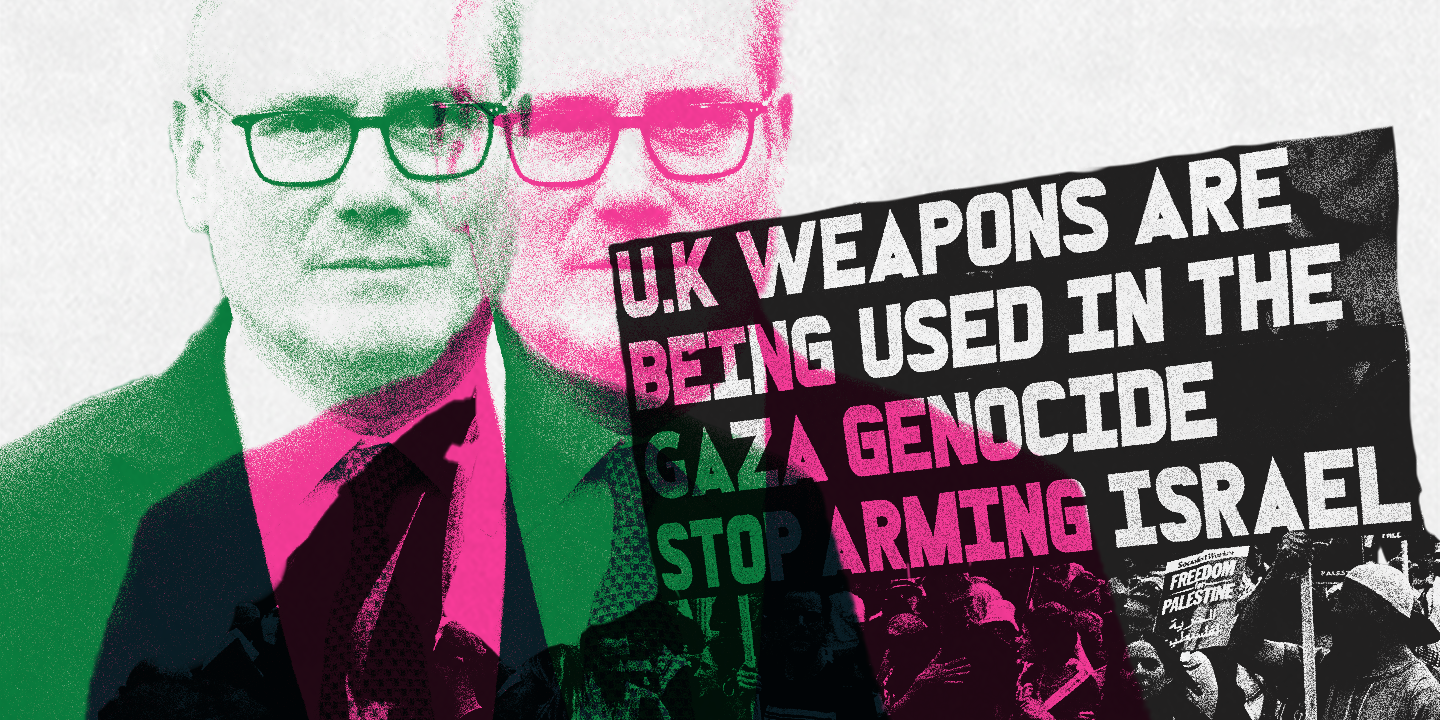 Images: Lauren Hurley / No 10 Downing Street, CC BY 4.0; Cary Bass-Deschênes, CC BY 4.0.
The UK Labour Party came to power in July 2024 promising change and an end to 14 years of the right-wing rule seen under the Conservative Party. Despite the fanfare, evidence suggests the Labour government has not done anything to roll back the civil liberties restrictions that the ‘Tories’ implemented over their years in power.
Timeline of key events
⬤ General events ⬤ Events related to Palestine Action
Interactive timeline graphic by Ida Flik
More policing, more surveillance, more of the same
In light of the Labour manifesto, this lack of change is not surprising. For instance, the manifesto does not mention the Police, Crime, Courts, and Sentencing Act of 2022 or the Public Order Act of 2023, two notable examples of Tory crackdowns on the right to protest. Instead, the manifesto pledges to increase police powers through enhanced neighbourhood policing and what are called Respect Orders, which allow police to ban persistent offenders from town centres.
In government, the Labour party has entrenched some of its right-wing predecessor’s worst overreaches and added some more of its own. This could be viewed as an example of the “Ratchet Effect”: a ruling party first creates and entrenches laws or practices, and the opposition party is unable or unwilling to repeal these laws once they get into power. This can lead to a country becoming increasingly right-wing over time.
On protest rights, we see that the new Crime and Policing Bill gives the police more powers to regulate acts of protest, with a wide array of extra measures including bans on facial coverings and the power to restrict peaceful protests if they are seen as having a “cumulative effect” along with other protests.
The civil rights group Liberty warned that, when combined, these increased powers could also lead to entire “protest-free zones” in large parts of British cities. Respect Orders, which ostensibly ban persistent offenders from town centres, have been used to prevent known activists from entering places where protests are occurring. Police can also now set strict conditions on protests passing near religious institutions such as mosques or synagogues to prevent alleged intimidation.
In September 2025, the government announced that it will pursue a controversial Digital ID scheme that would be required to prove one’s right to work, and could potentially be used for other aspects of life in the UK, such as right to rent checks. The government is also expanding the use of Live Facial Recognition (LFR) to every police force in England and Wales, including a large fleet of mobile surveillance vans that can scan crowds in real time. This was used to help police the Notting Hill Carnival in August 2025.
The right to protest, but only for some.
Far-right commentatorsoften argue there is a “two-tier policing” system in the UK, whereby the policing and sentencing of right-wing and far-right nationalist protesters and groups is disproportionate compared to that of liberal or left-wing groups. Observation of recent years suggests the opposite is true. Amid one of the most intense incidences of racially-motivated violence in recent British history, the government has chosen to focus much of its energy and public rhetoric targetting non-violent protestors calling for action on climate change and an end to the genocide in Gaza.
At the same time, when it comes to repressive police practices, minority communities and other people in vulnerable positions tend to suffer the brunt. Such police practices and abuses as stop-and-search, use of weapons (e.g. tasers), sexual misconduct and deaths in police custody tend to affect women, LGBTQ+ people and ethnic minorities far more than the demographics associated with the UK far right.
Conclusion: death by a thousand cuts
Labour said very little about civil liberties and protest rights in their manifesto, and have in fact retained almost all of the Conservatives’ policies in this area and gone further in some respects. Under Keir Starmer’s leadership, Labour’s strategy is to pursue right-of-centre voters while taking for granted that left-of-centre voters have no other viable options. If this trend continues, we are unlikely to see a reversal of this regressive course on protest rights and civil liberties.
By James Olufemi Anderson
Our work is only possible with your support.
Become a Friend of Statewatch from as little as £1/€1 per month.
Further reading
Invoking the "instrumentalisation" of migration, the UK follows in the EU's footsteps
In 2025 the UK announced a new sanctions regime targeting alleged people smugglers. It makes use of the “instrumentalisation of migrants” narrative that has been increasingly invoked by the EU since the early 2020s. This article explains what this narrative is, the powers it is used to justify and how it contributes to the degradation of migrant and refugee rights.
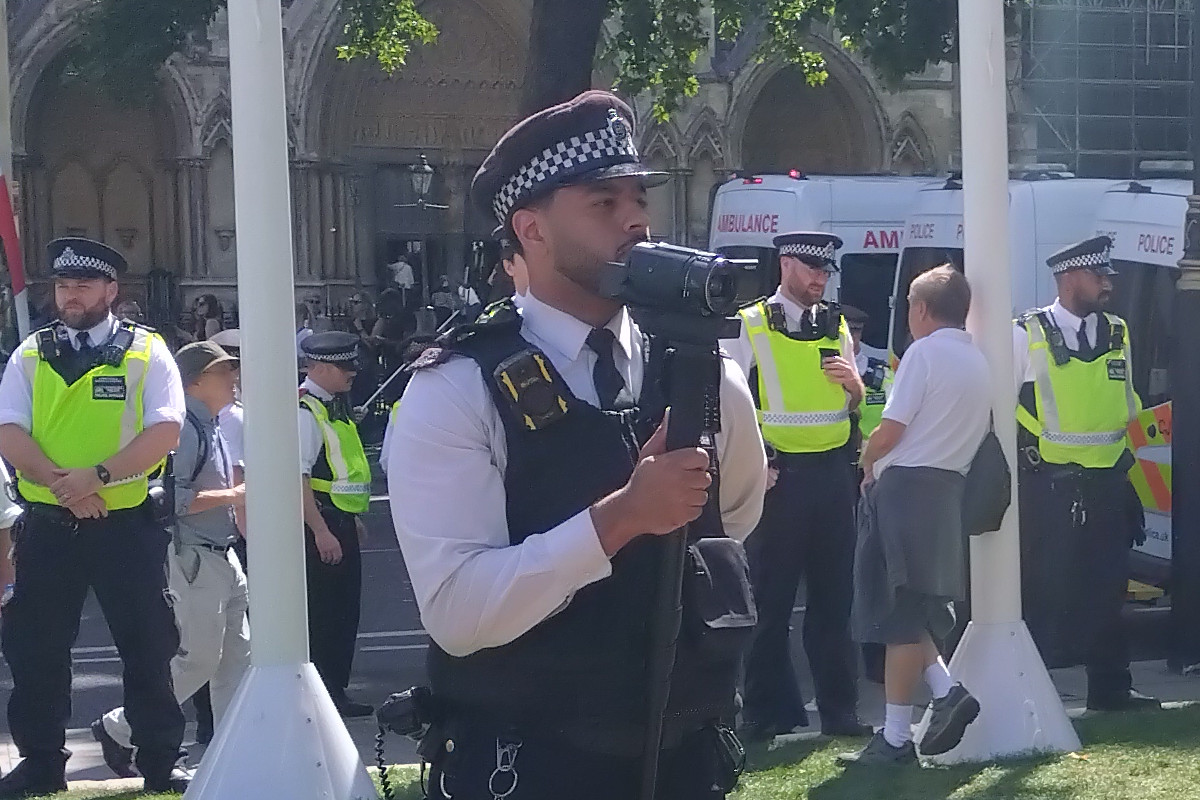
UK: Police footage of protests can be held for decades
Police in London and across the UK regularly film protests, with multiple officers often deployed to do so. A response to a recent freedom of information request says that footage of “a public order event without targeted individuals” can be held “for a period of up to 6 years.” However, if it contains “intelligence” it can potentially be held for decades.
Spotted an error? If you've spotted a problem with this page, just click once to let us know.