Statewatch News online
12th year reporting on civil liberties in the European Union (updated 9.2.10)  Editor: Tony Bunyan

What's New | Statewatch Home page | EU research resources: Joint online subscription | European Civil Liberties Network | Friends of Statewatch | Statewatch analyses post 11 September 2001 | Statewatch European Monitoring and Documentation Centre (SEMDOC)
News Online Archives:
1999  2000  2001  2002 2003  2004  2005  2006  2007  2008 2009

February 2010

Join Statewatch news e-mail list: Latest e-mail alert: 28 January 2010 In the News including: British Muslims detained in Yemen claim they were tortured in prison/Switzerland: Police Smash School for Undocumented Migrants/UK: Campus extremists under scrutiny

 EU-USA SWIFT AGREEMENT: European Parliament is to debate on Wednesday 10 February and vote on 11 February on Report from the Committee on Civil Liberties (LIBE) calling for the proposal for the Interim Agreement to be rejected - the Agreement covers the transfer of financial data from the EU banks to the USA for the purpose of tackling terrorism. The Committee says it has not been given enough time, not been given the documents it needs and has major privacy and data protection reservations (reflecting those of EU data protection bodies).

Hilary Clinton (US Secretary of State) and Timothy Geithner (US Secretary of Treasury) are putting pressure on the parliament urging the parliament to change its mind: Clinton-Geithner letter to EP (pdf). Letter from the President of the European Parliament to the Council of the European Union: EP Letter (pdf). And in the flurry of activity the Council (27 governments) has adopted a Declaration: Draft Council declaration (pdf) and under pressure from the parliament to provide more information have published: Declassified Council Decision (pdf)

Background:

- SWIFT: Civil Liberties Committee recommends rejecting the agreement (EP press release (pdf)
-
Draft EP Resolution (pdf)
-
Opinion of the EP Legal Service
-
Opinion of the European Data Protection Supervisor (pdf)
-
Opinion of the Article 29 Working Party (pdf)
-
Draft EU-USA SWIFT Agreement (pdf)

UK: ‘Fast and fair?’: A report by the Parliamentary Ombudsman on the UK Border Agency (pdf): "clearly demonstrates that the Agency’s failure to resolve applications within reasonable timescales can have serious implications for the individuals involved, for society in general and for the public purse."

EU to slam new Facebook privacy settings (euractiv, link): "The European Commission is threatening action against Facebook for recent changes to its privacy settings, which make personal information available by default, going against the EU's drive for more privacy protection on the Internet, especially for minors... Despite growing pressure to improve data protection and the safety of social network users, Facebook surprisingly changed its privacy policy at the end of January, making it easier to access to personal information hosted on its platform."

Dutch Iraq inquiry – a slap on the wrist for the government:

"In January of this year the Davids committee presented its very thorough report. The main conclusion was that the military action of the US and the UK against Iraq “had no sound mandate under international law.” The famous US Security Council Resolution 1441 “cannot reasonably be interpreted (as the government did) as authorising individual Member States to use military force to compel Iraq to comply with the Security Council’s resolutions without authorisation from the Security Council”.

EU: 500,000 EU computers can access private British data (Observer, link)

US: The Counter-Counterinsurgency Manual: Or, Notes on Demilitarizing American Society (THES, link):

"The Counter-Counterinsurgency Manual - its authors call it a pamphlet - may well come to be regarded as the most important work to emerge from America's social sciences so far this millennium. It was written by some of the founders of the Network of Concerned Anthropologists (NCA), 11 anthropologists who came together in 2007 to express their concerns over recent efforts to militarise the discipline."

See: Network of Concerned Anthropologists (link)

Council of Europe: Issue Paper, Thomas Hammarberg, the Council of Europe Commissioner for Human Rights: Criminalisation of migration in Europe: Human Rights implications (pdf)

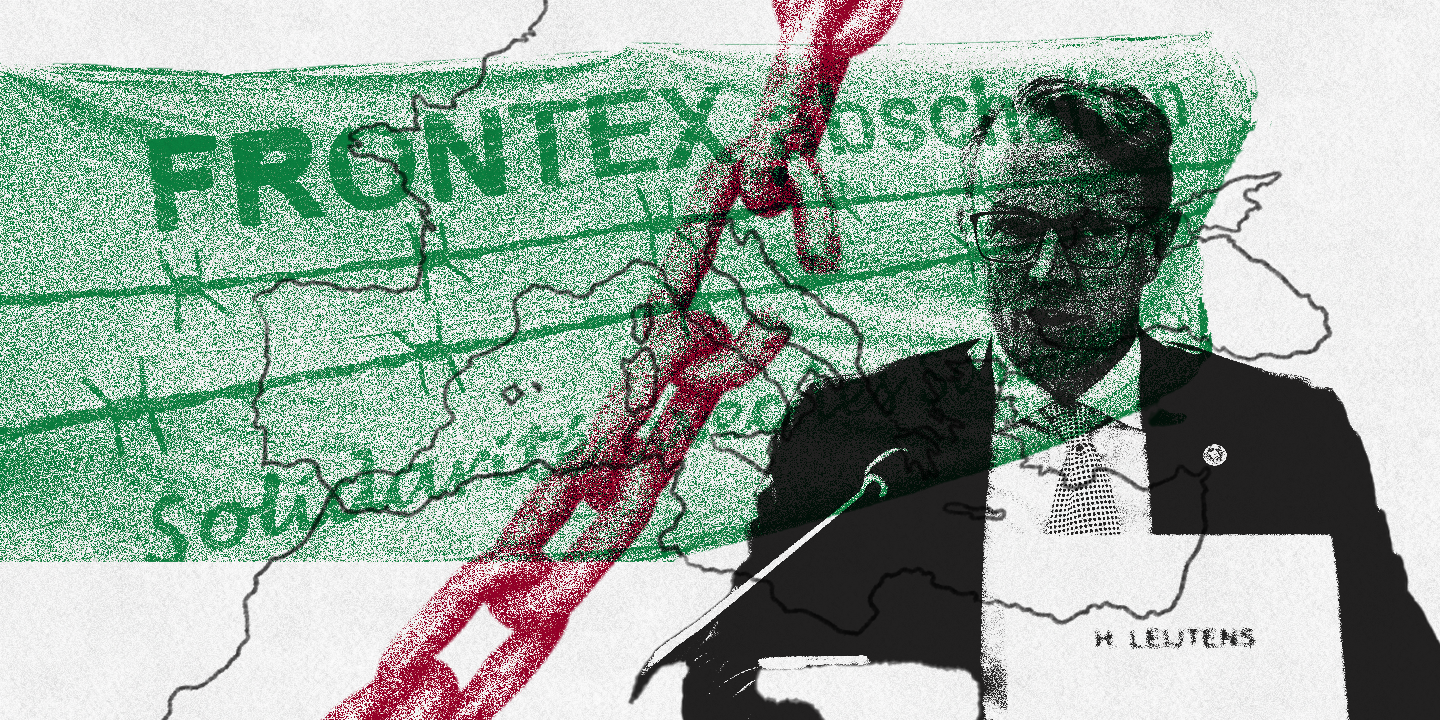
EU-GREECE: Frontex first Regional Office to open in Piraeus (link):

Piraeus will host the 1st Regional Office of FRONTEX, following a decision passed by the representatives of Member States of the EU meeting in
Madrid. The Frontex operations center will be located near the offices of Body Port, which has been operating since 2004 the National Center for
Border Marine, who is the contact point of Greece with FRONTEX concerning maritime borders.

EU: Note of the Meijers Committee (Standing Committee of experts on international immigration, refugees and criminal law) on:
Proposals for recasting the Qualification Directive (COM(2009) 551) and the Procedures Directive (COM(2009) 554) (pdf)

ITALY: Medecins sans Frontieres: Abstract: Over the Wall: A tour of Italy’s migrant centres. January 2010 (pdf)

EU: Note of the Meijers Committee (Standing Committee of experts on international immigration, refugees and criminal law) on: Amended proposal for the Eurodac Regulation (COM (2009) 342) and the Decision on requesting comparisons with Eurodac data by Member States’ law enforcement authorities and Europol for law enforcement purposes (COM (2009) 344) (pdf):

"The Meijers Committee, sharing the serious concerns of the European Data Protection Supervisor and the national data protection authorities, strongly advices the members of the European Parliament to vote against this legislative proposal of the European Commission on the following grounds:

- The proposal runs counter to fundamental data protection principles such as proportionality of data processing and respect for purpose limitation.
- The proposal violates fundamental rights of the asylum seekers, including the right to privacy and data protection, the right to asylum and protection against torture and inhuman treatment.
- The proposal will lead to stigmatisation of this particular group of asylum seekers, in violation of the principle of non discrimination.
- When adopted, there is a serious risk that these instruments (the proposed Decision and Regulation) will invoke preliminary questions by national courts and subsequently will be held unlawful by the European Court of Justice, considering recent jurisprudence of both the European Court of Justice and the European Court for Human Rights."

UK: Parliament: Joint Human Rights Committee report: Legislative Scrutiny: Digital Economy Bill (pdf). The Bill raises substantive issues:

"We do not believe that such a skeletal approach to powers which engage human rights is appropriate. There is potential for these powers to be applied in a disproportionate manner which could lead to a breach of internet users’ rights to respect for correspondence and freedom of expression...

Without a clear picture of the criteria for the imposition of technical measures it is difficult to reach a final conclusion on the fairness of the process for the imposition of technical measures."

EU: Malta and Frontex missions: ‘No chance if the rules are changed’ (Malta Indpendent Online, link): "Malta will certainly not take part in any Frontex operation this year if the rules are changed to the effect that people rescued off the sea are taken to the host nation rather than the nearest port of call, this newspaper has learned."

European Parliament:
SWIFT: Civil Liberties Committee recommends rejecting the agreement (European Parliament press release (pdf):

"Parliament should withhold its consent to the EU's interim agreement on banking data transfers to the USA via the SWIFT network, the Civil Liberties Committee recommended today. The deal will be put to a plenary vote in Strasbourg on Thursday 11 February. Withholding Parliament's consent would render the agreement legally void - in effect, a rejection. The committee report, approved with 29 votes in favour, 23 against and 1 abstention."

The Resolution now goes to the parliament's plenary session next week. See:Draft Resolution (pdf) and Opinion of the EP Legal Service. See: MEPs threaten to derail EU-US data-transfer deal (European Voice, link); Bank data deal under heavy fire from EU Parliamentarians (link) and Clinton calls Buzek on SWIFT - Washington concerned about threat to counter-terrorism measure (European Voice, link)

Council of Europe: Resolution: The detention of asylum seekers and irregular migrants in Europe (pdf)

"The Parliamentary Assembly of the Council of Europe (PACE) adopted a resolution on the detention of asylum seekers and irregular migrants in Europe. The resolution, adopted on 28 January, states in no unclear terms that detention results from political decisions that represent a "hardening attitude towards irregular migrants and asylum seekers".

The resolution goes on to criticise the overpopulation of detention centres, and the deterioration of conditions and safeguards for asylum seekers and irregular migrants alike. The resolution states that the "conditions and safeguards afforded to immigration detainees who have committed no crime are often worse than those of criminal detainees." Elsewhere, the resolution criticises the European Union's adoption of the so-called Returns Directive, for adopting the "lowest common standard in regard to detention length." (thanks to NADC).

UK: Report on UK Terorrism Act 2005: FIfth Report of the Independent Reviewer pursuant to Section 14.3 of the Prevention of Terrorism Act 2005: Lord Carlile QC (pdf)

ID and the final exclusion - Biometrics and surveillance are set to make life virtually impossible for those without legal status here (IRR News Service, link)

Statewatch analyses: Homeland Security comes to Europe (pdf) by Ben Hayes. The legacy of the “war on terror” is a new way of thinking about security and a cash cow for the defence industry and Germany: A network being networked: the Federal Criminal Police Office databases and the surveillance of “troublemakers” (pdf) by Eric Topfer

UK: Home Affairs Select Committee report: The Home Office’s Response to Terrorist Attacks (pdf) and see: Home Office: Memorandum to the Home Affairs Committee Post-Legislative Assessment of the Prevention of Terrorism Act 2005 (pdf)

UK: Border staff humiliate and trick asylum seekers: whistleblower Louise Perrett says she was advised at the Border Agency office in Cardiff to refuse difficult asylum claims (Guardian, link)

POLAND: Priest fingerprinting schoolchildren: A Polish priest has installed in his church an electronic fingerprint reader for schoolchildren preparing for the sacrament of confirmation. Before last summer holidays pupils of a high school in the southwestern town of Gryfów Slaski were fingerprinted by the priest from the local parish of St Hedvige. Over three years of their high school education they will have their fingerprints scanned on an electronic reader every time they go to the church to confirm their attendance to the mass and other obligatory worships. Such a high-tech means of authentication of pupils raised concerns among Polish state agencies responsible for protecting personal data and civil liberties. Both General Office for Data Protection (GIODO) and Polish Ombudsman Office declared they will undertake necessary action to check legality of this unusual church procedure. See: Reuters, Polish priest checks fingerprints for mass attendance (link)

GERMANY-CIA: Extraordinary Rendition Plot: CIA Had Secret Plan to Kidnap German-Syrian Suspect in Hamburg (Spiegel Online, link) and Germany will probe CIA murder and rendition plots on its soil (New Europe, link)

Terre des hommes (Switzerland) report:
Disappearing, departing, running away A surfeit of children in Europe? Study carried out in Belgium, France, Spain and Switzerland on the disappearances of unaccompanied foreign minors placed in institutions (pdf)

January 2010

A leap forward in intelligence gathering: New developments in commercial geospatial technology promise big payoff (link)

Portugal/EU: Navy opens fire on undercover Frontex mission

On 27 January 2010, the Portuguese Lusa press agency and Jornal de Noticias newspaper reported that Pegaso, a launch of the Portugese navy fired four machine gun rounds at a maritime police boat involved in an undercover coastal surveillance operation four miles off the coast of Salema under the auspices of Frontex. The rounds followed identification of the boat as "suspicious", although it later emerged that three maritime police officers were on board. The boat sped away before firing light signals that identified it as a police vessel. The region is deemed an area for the trafficking of drugs from north Africa to Europe.

The Serviço de Estrangeiros e Fronteiras (SEF, Immigration and Border Service) and Armada (navy) did not comment, with the latter explaining that it does not discuss "issues of an operational nature". On 22 December 2009, Frontex reached a cooperation agreement in maritime surveillance with the European Maritime Safety Agency (EMSA), based in Lisbon, and the Community Fisheries Control Agency (CFCA), based in Vigo (Spain) in the region of Galicia that is close to the Portuguese border. The agreement includes cooperation in the field of maritime surveillance to protect external maritime borders and for fisheries control. See:
Jornal de Noticias, 27.1.2010, Cooperation agreement in maritime surveillance: Frontex news release, 22.12.09. And: Spanish EU Presidency - “Security problems at sea can only be solved if there is optimum collaboration on every level.” (link)
(link)

Crisis Forum, Climate Change and Violence Workshop Series 2008 – 2010, Workshop 4: Securing the State: Securing the Corporate Nexus: The Coming Militarization of Climate Change, 27 November 2009, The Rosebowl, Leeds Metropolitan University: Video: Tony Bunyan talk : State Research Activism: Challenging the drfit towards a more authoritarian and militarised Europe(link) and Dr. Steve Wright: Techno-fixing border controls: The new sub-lethal paradigm for mass exclusion (link)

EU: New Commission proposal migrating the ex-third pillar parts of SIS to SIS II: Proposal for a Council Regulation amending Decision 2008/839/JHA on migration from the Schengen Information System (SIS 1+) to the second generation Schengen Information System (SIS II) (pdf). This is needed because of substantial technical problems with launching SIS II: "The time-frame of the current migration instruments, and in particular their date of expiry which is currently set to be 30 June 2010 at the latest, appears no longer realistic."

USA: General Accountability Office (GAO) report: Better Use of Terrorist Watchlist Information and Improvements in Deployment of Passenger Screening Checkpoint Technologies Could Further Strengthen Security (pdf) This report by the respected GAO confirms that:

"the intelligence community did not effectively complete these steps and link available information to the subject before the incident. Therefore, agencies did not nominate the individual to the watchlist or any of the subset lists used during agency screening, such as the “No Fly” list... Also, screening agencies stated that they do not check against all records in the watchlist.

On body scanners (called "Whole Body Imagers") the USA is to install 878 units by 2014 but the GAO notes:

"In October 2009, GAO reported that TSA had not yet conducted an assessment of the technology’s vulnerabilities to determine the extent to which a terrorist could employ tactics that would evade detection by the AIT. Thus, it is unclear whether the AIT or other technologies would have detected the weapon used in the December 25 attempted attack"

Conference: Paying the Price for Journalism and Democracy (European Federation of Journalists, link). European Parliament, Room 6Q1 2 February 2010, 9.30 - 12.30. Journalism, its future and the media policies of the European Union are matters at the heart of a special meeting being organised by the European Federation of Journalists at the European Parliament on 2 February.

UN: Human Rights Council: Joint study on global practices in relation to secret detention in the context of countering terrorism: Executive Summary (pdf) and Full-report (221 pages, pdf)

EU: New case taken to the European Court of Justice on access to EU documents: Case T-529/09 before the General Court - Sophie in 't Veld v. Council of the European Union (pdf). ALDE MEP Sophie in 't Veld's case concerns access to the Council Legal Services' Opinion on the EU-USA SWIFT Agreement. In the Turco case the ECJ decide that access to could given to the Opinion of the Legal Service concerning policy matters.

EU: Draft Commission Decision establishing the Handbook for the processing of visa applications and the modification of issued visas (115 pages, pdf)

UK: Ministry of Justice lists eco-activists alongside terrorists - Campaigners lumped in with al-Qaida and far right - Government criticised for tarring peaceful protesters (Guardian, link)

EU: Draft Council Decision supplementing the Schengen Borders Code as regards the surveillance of the sea external borders in the context of the operational cooperation coordinated by the European Agency for the Management of Operational Cooperation at the External Borders (pdf) and EP Briefing Note: Draft Council Decision supplementing the Schengen Borders Code as regards sea border surveillance in the context of operational cooperation coordinated by FRONTEX (COM(2009)658) as amended by the Council on 25 January 2010 (pdf)

EU: Briefing Note for the European Parliament Civil Liberties Committee (LIBE): EU Readmission Agreements: Overview (pdf)

France: Statements in support of the Kurdish refugees who landed in Corsica: Fourteen Corsican organisations issued a joint statement in support of the Kurds from Syria who landed in Bonifacio on 22 January

Spain: Vic town council norms to stop sans papiers becoming residents withdrawn

Following opposition from trade unions, migrant and anti-racist groups and social organisations, and the intervention of the central government, the town council of Vic (Catalunya) has withdrawn a norm that amended the criteria for registration in the residents' register (padrón) which excluded irregular migrants, as it would not have allowed foreigners to register unless they had a valid residence permit or could offer proof that procedures for it to be issued or renewed were underway.

UK: Supreme Court quashes Statutory Orders implementing UN Security Council Resolutions and the UN 'terrorism list'

EU-USA: Council of the European Union (27 governments) put pressure on the European Parliament to "fast-track" the EU-USA SWIFT (transfer of all financial transactions in order to counter terrorism) while the EU's Article 29 Working Party on data protection and the European Data Protection Supervisor (EDPS) express strong criticisms:

- Opinion of the European Data Protection Supervisor (pdf)
-
Opinion of the Article 29 Working Party (pdf)
-
Draft Agreement (pdf)
-
Draft Council Decision (21.1.10, pdf)

The EDPS concludes that the Interim SWIFT agreement "leave some dangerous lacunae". The "necessity" is not demonstrated and for legal certainty and foreseeability, "many important data protection elements are still absent or not clearly defined"; no limits are placed on the bulk transfer of data and:

"Furthermore, sharing of personal data with other national authorities as well as third countries is neither clearly defined not subject to appropriate guarantees.. [and] many data subjects rights... are either disregarded or have no concrete and clear way to be enforced"

The Article 29 Working Party observes that the scope of the definition of terrorism differs from that in the EU's Framework Decision (2002); there has been do assessment that the level of data protection meets EU standards; and it questions whether any form of redress "will prove feasible/practicable for European citizens in practice."

Security before liberty - An EU-US joint declaration on aviation security shows the powerful influence of US homeland security policy (Guardian, link) by Tony Bunyan

EU: Migreurop: 2010, the year of the right to migrate? and Italian, French (links)

EU: The Schengen Information System (SIS) has "over half a million terminals located in the security services of the Member States": The reference to "security services" refers to police, immigration, customs and internal security agencies. See EU doc no: 13305/09 (see p3, pdf). This extraordinary figure of more than 500,000 access terminals is given in a Note from the French delegation bidding to house the planned Agency for large-scale IT systems.

The previously known figure for the number of terminals with access to the SIS was given in 2003 when there were 13 member states with of access to the Schengen Information System (SIS) when the figures clearly surprised the Council of the European Union (the EU governments) who found there were:

"125,000 access points !!!” (exclamation marks in original) (EU doc no: 8857/03, pdf)

Now there are now 25 Schengen member states. Moreover, the new SIS II system will allow access by all agencies to all the data held - under the existing SIS system data can only be access by agencies in the same field, ie: police agencies can only access police data.

Tony Bunyan, Statewatch editor, comments:

"The number of access points throughout the EU there will be as new databases are started and new agencies are created is going to be gigantic. It is well known that the greater the points of access the greater the number of people who have access the greater is the chance that data will be misplaced, lost or illegally accessed. Private security firms, multinationals and internal and foreign agencies as well as criminals all use their "contacts" to get unauthorised access to personal data. The idea that mass databases can be totally secure and that privacy can be guaranteed is a fallacy."

DATA SECURITY: Computer security: fraud fears as scientists crack 'anonymous' datasets - Computer experts in the US can now identify people from personal information, leading to concerns over security and confidentiality (Observer, link)

UK: CCTV in the sky: police plan to use military-style spy drones - Arms manufacturer BAE Systems developing national strategy with consortium of government agencies (Guardian, link): "Police in the UK are planning to use unmanned spy drones, controversially deployed in Afghanistan, for the "routine" monitoring of antisocial motorists, protesters, agricultural thieves and fly-tippers, in a significant expansion of covert state surveillance."

Privacy and security can be reconciled - There are better ways than body scanners and group-related profiling to improve security at airports (Guardian, link) by Martin Scheinin, the UN Special Rapporteur on human rights and counter-terrorism:

"some measures are, and ought to remain, prohibited because they nullify the right to privacy and therefore conflict with foundational principles of a free society. Further, the most privacy intrusive measures are not always the most effective ones from the perspective of preventing terrorism.... body scanners are ineffective. They are unlikely to detect 80 grams of PETN explosives hidden in the underware of a person. And once it is known that body scanners are in use, they are easy to avoid by hiding this type of explosives in a body cavity or in a commercial item in one's hand luggage. Further, as body scanners will slow down the security checks at airports, it is likely, although not unavoidable, that their use will result in a new wave of discriminatory profiling based directly or indirectly on nationality, ethnicity or religion."

Just over the horizon — the surveillance society and the state in the EU, by Tony Bunyan, Race & Class, January 2010 (SAGE, link):

"In cold war times, the West espoused liberal democracy and freedom from surveillance and control. It is thus ironic that with the cold war a distant memory — though it only ended less than twenty years ago — the EU and its member states are set on a path which will, in just a few years time, turn it into the most surveilled, monitored region in the world. The wider context for all this is increased state racism (both at the national and EU levels), combined with the emergence of the ‘policing state , engendered by a political and governmental authoritarianism that legitimises itself through the trappings of representative democracy."

Informal Justice and Home Affairs Ministers meeting in Toleda, Spain: EU-USA Joint Declaration on Aviation Security: Joint Declaration (pdf). In addition to covering body scanners and biometrics the possibility of an EU PNR (Passenger Name Record) database is raised again. The current proposal in the EU is for a PNR system which would record data on people flying in and out of the EU - not flights within the EU (EU doc no: 5618/2/09, June 2009, pdf).

Press statement (22.01.10): "The Vice-president of the European Commission and head of security, Jacques Barrot, stated that the Community Executive “is going to speed up its report on technologies and body scanners” and restart the project to create a common passenger name record (PNR) for Europe with “the urgency the ministers have undertaken to back this project”.

The three politicians highlighted the contradiction in the exchange of passenger data with the United States but not between European States, “as if a terrorist could not catch a plane in Heathrow to travel to Madrid”, said Rubalcaba [Spanish Interior Minister]".

UK: Putting John Denham's speech in context - How progressive is John Denham's apparent shift from 'race' to class strategies? (IRR News Service, link)

ITALY: Migreurop publishes a report following the fact-finding mission on 15 January 2010: Press release: Violence, racism and lies, from Rosarno to Bari (pdf), French (link), Italian (link) Spanish (link) and Report (French, pdf, link)

EU: Statewatch Briefing: Internal Security Strategy for the European Union (pdf) by Artur Gruszczak, European Centre Natolin, Warsaw. See: Spanish Council Presidency: Informal Meeting of Ministers for Justice and Home Affairs, Toledo, 20-22 January 2010: Agenda (pdf)

European Parliament: Transcript of the hearing for Commissioner Malstrom (Home Affairs: Internal security and immigration, pdf)

EU: Regulation on public access to EU documents: European Ombudsman finds that the European Commission "has no intention of trying to complete its registers" See: Ombudsman: Follow-up to Critical and further remarks: How the EU institutions: How the EU institutions responded to the Ombudsman's Recommendations in 2008 (December 2009, see p35-36, pdf). In 2006 Statewatch lodged a complaint with the European Ombudsman against the European Commission for its failure to maintain a proper public register of documents as required under Article 11 of the Regulation on access to EU documents. The Ombudsman found there was a case of maladministration and that "“The Commission should, as soon as possible, include references to all the documents within the meaning of Article 3(a) that are in its possession in the register foreseen by Article 11 of this regulation, to the extent that this has not yet been done." The Commission reject the Ombudsman's Recommendation.

In compiling his Follow-up report the Commission was invited to comment on any progress and again refused to accept that it had any obligation to list references to all documents as it is required to do under Article 11 of the Regulation: President Barroso's letter to the Ombudsman (pdf). The Ombudsman's Follow-up Report comments:

"The Ombudsman recalls that during his inquiry, the Commission consistently argued that it was going to expand the scope of its registers and led the Ombudsman to believe that the problem was mainly a technical one (i.e., the absence of a harmonised data base for the registration of documents). The Ombudsman notes, with regret, that the Commission’s new argument suggests that it has no intention of trying to complete its registers."

Tony Bunyan, Statewatch editor, comments:

"Public access to documents is the life-blood of democracy and EU public registers listing all documents provide a rich resource for public debate, discussion and participation. The Commission continued intransigence undermines the democratic process and is utterly contrary to the much cited principles of openness, transparency and accountability in the EU."

Background: Statewatch Analysis & Postscript: Statewatch wins European Ombudsman complaint against the European Commission over its public register of documents – but it refuses to comply (pdf)

EU: European Ombudsman re-elected (European Parliament press release, pdf)

Greece: UNHCR call to stop Dublin II returns to Greece

EU: New European Commission: Home Affairs (Internal security and immigration) and Fundamental Rights (Justice, Fundamental Rights and Citizenship) need to have separate Directorate-Generals (DG) As the European Parliament hearings of the new Commissioners nears completion a major question remain unanswered. Tony Bunyan, Statewatch editor, comments:

"We have two Commissioners but one DG dealing with both internal security and immigration on the one hand and fundamental rights and justice on the other. Experience at national level shows that there should be a complete separation between Home Affairs and Justice/Fundamental Rights. By keeping a single Directorate-General (under a single Director-General) there is a real danger that the already pervading culture of internal security and control will continue to contaminate justice and rights.

UN: HUMAN RIGHTS COUNCIL: Report of the Special Rapporteur on the promotion and protection of human rights and fundamental freedoms while countering terrorism, Martin Scheinin (pdf):

"The Special Rapporteur highlights the erosion of the right to privacy in the fight against terrorism in section C. This erosion takes place through the use of surveillance powers and new technologies, which are used without adequate legal safeguards. States have endangered the protection of the right to privacy by not extending pre-existing safeguards in their cooperation with third countries and private actors. These measures have not only led to violations of the right to privacy, but also have an impact on due process rights and the freedom of movement – especially at borders – and can have a chilling effect on the freedom of association and the freedom of expression."

CYPRUS:

- Pro Annan V: Rethinking the UN-viability of the constitutional arrangement (pdf) by Nicos Trimikliniotis
-
Flash Report: on fundamental rights in Cyprus, May 2009 (pdf) by Nicos Trimikliniotis and Corina Demetriou
-
The situation concerning homophobia and discrimination on grounds of sexual orientation (pdf) by Nicos Trimikliniotis and Stavros Stavrou Karayanni
-
Human rights issues and debates during the 2009 EU parliament election campaign: The Case of Cyprus (pdf) by Nicos Trimikliniotis & Corina Demetriou: paper for Symfiliosi for the Fundamental Rights Agency
-
Trafficking, Profiteering and State Complicity: Researching the Demand Side of Prostitution and Trafficking in Cyprus (pdf) by Nicos Trimikliniotis, International Peace Research Institute, Nicosia Cyprus
-
Nationality and citizenship in Cyprus since 1945: Communal citizenship, gendered nationality and the adventures of a post-colonial subject in a divided country (pdf) by Nicos Trimikliniotis
-
Flash Report on racism and xenophobia in Cyprus, August 2009 (pdf) by Nicos Trimikliniotis and Corina Demetriou

UK: Police use dogs and helicopter to swoop on pacifist student (Evening Standard, link): "A pacifist is suing police for malicious arrest after he was held under anti-terror laws for staging a protest outside an Army base....Mr Moulton, a student at Hull University, said he was taking action because he was refused an internship at the House of Commons and was barred from entering the US because of his criminal record."

GREECE: The Athens Affair - How some extremely smart hackers pulled off the most audacious cell-network break-in ever (IEEE Spectrum, link). Article on the technical side of the interception of government Ministers and state officials' communications in the run-up to the 2004 Olympic Games widely believed to be on behalf of the CIA.

EU: European Commission responds to European Security Research and Innovation Forum (ESRIF) report: "A European Security Research and Innovation Agenda - Commission's initial position on ESRIF's key findings and recommendations" (pdf):

- ESRIF Final Report (324 pages, 4MB, pdf)
- Background: Report from Statewatch and theTransnational Institute:
NeoConOpticon - The EU Security-Industrial Complex by Ben Hayes (pdf)

GREECE: Greek Helsinki Monitor: European Court conviction for ill-treatment in police hands. Eleventh conviction for police violence (pdf):

"This is the eleventh ruling in four years by an international judicial or quasi-judicial body finding Greece in violation of the prohibition of torture or of the right to life. Eight of these cases were submitted by GHM."

UK: Twitter joke led to Terror Act arrest and airport life ban (Independent, link)

EU: Parliament threatens to derail EU-US bank data deal (euobserver, link). See: Full-text: Buzek, January letter and Full-text: Buzek, December letter (pdf)

EU-GERMANY: Directive on data retention: now the floor goes to the German Constitutional Court (EFSJ blog, link)

RIGHTS: Italy Shows its Ugly Side (Inter Press Service, link): "If the first step towards solving a problem is recognising you have one, the Italian authorities look to be some way from tackling the growing racism and xenophobia affecting sections of its society."

EU: Development: EU Aid to be Used for Fingerprinting by David Cronin (Inter Press Service, link): "Aid traditionally reserved for keeping victims of war and disasters alive may now be used for security-related projects such as the fingerprinting of refugees, European Union officials have decided."

EU: FRONTEX Work Programme 2010 (pdf)

EU-USA: Heinrich Boll Foundation (North America): Transatlantic Information Sharing: At a Crossroads (link):

"a new report - commissioned by the Heinrich Böll Stiftung North America and the Migration Policy Institute (MPI) - explores, negotiations on a binding international agreement that will govern the sharing of personal information for law enforcement purposes between the United States and the European Union, while high on the transatlantic policy agenda, face significant challenges."

Italy: After the racist violence in Italy : a Migreurop mission visits the area (link): French and Italian

UK: House of Commons Justice Committee: Cutting crime: the case for justice reinvestment (pdf): "the Government’s main answer to the current overcrowding of prisons and the predicted rise in the prison population—already at a record high—is to provide more prison places rather than to seek to address the root causes of this seemingly incessant growth."

EU: Background documents

- SWIFT: Agreement between the European Union and the United States of America on the processing and transfer of Financial Messaging Data from the European Union to the United States for purposes of the Terrorist Finance Tracking Program (OJ, pdf)

- FRONTEX: Frontex specialised branches (33 pages, pdf). FRONTEXT's role is expanding rapidly and will do so even more under the Stockholm Programme. Here a management consultants report to justify creating Mobile Operations Project Teams (MPOT) operating on the ground/sea, Centres of Excellence (CEO) and Intelligence and Liaison Coordination Offices (ILCO).

- EAW: European Arrest Warrants: Follow-up to the final report on the fourth round of mutual evaluations - The practical application of the European Arrest Warrant and corresponding surrender procedures between Member States (EU doc no: 17132/09, pdf). Discusses a number of recommendations (including "provisional arrest") which could either be brought about by legislation or by the "back-door" through "soft law" Council Conclusions: "non-legislative action is possible. With regard to some recommendations, a possibility of going forward could be the development of best practices. These best practices could be laid down in Council conclusions, but could also be integrated into the European arrest warrant Handbook."

- EUROJUST: Strategic Seminar on the implementation of the new Eurojust Decision in the Member States - " Building new bridges between Eurojust and the Member States" Stockholm, 7 - 8 September 2009 (EU doc no: 16925/09, pdf): "This seminar was part of a series of meetings organised in the framework of the Informal Working Group (IWG) on the implementation of the new Eurojust Decision, initiated by Eurojust together with the Trio Presidency, the Council Secretariat and the Commission"

- EU-NATO: PMG recommendations on concrete measures to improve EU-NATO cooperation (17344/09, pdf)

- EU diplomatic representation in third countries - First half of 2010 (EU doc no: 17770/09, pdf)

- VISA INFORMATION SYSTEM: Programme of deployment of the VIS - Activities of the Group of Friends of the VIS (EU doc no: 14340/09, pdf), including: "the start of operations of the VIS will be delayed beyond September 2010, because of certain problems in both the central system and at national level."

- Union for the Mediterranean: Draft EU Guidelines and Proposal for a Work Programme for 2010 : JHA issues from p42 (EU doc no: 17594/09, pdf)

EU: Council of the European Union: Work stopped on the proposal for a Schengen evaluation system - no mention of this proposal in the Spanish Council Presidency agendas. See: Draft Council Regulation and draft Council Decision on the establishment of an evaluation mechanism to verify the application of the Schengen acquis - Proposal for the way ahead (15339/1/09, pdf) The proposal is a non-legislative act to be adopted by the Council. The "way ahead" says that:

"some parts of the draft Regulation and Decision have raised serious concerns with a substantial number of Member States. Even though a greater efficiency of the evaluation mechanism is welcomed in general, the establishment of a new evaluation mechanism implying the (co)existence of two different but parallel evaluation processes is strongly contested. The proposals suggest one evaluation mechanism for new Member States and one for existing Schengen Member States, which is broadly considered not in line with the enhanced efficiency of the mechanism. Furthermore, there is little support among Member States for the substantial shift of competences from the Member States to the Commission."

It is no wonder that the Member States (governments) on the Committee could not accept the Commission's proposal as the Council's position in an earlier document showed that over 200 objections to the text are expressed in 53 footnotes, see: EU doc no; 13831/2/09 (pdf)

ECHR-UK:
Stop-and-search powers ruled illegal by European court (BBC News, link) Terrorism Act 2000 Section 44: "Police powers to use terror laws to stop and search people without grounds for suspicion are illegal, the European Court of Human Rights has ruled." and Full-text of judgment (pdf)

Belgium: Suspicious death of a Tunisian in Vottem detention centre

BODY SCANNERS: Body scanners can store, send images, group says (CNN Travel, link)

UK: MI5 'still using threats to recruit Muslim spies' (Independent, link): "MI5 faces accusations that its officers have blackmailed and harassed vulnerable immigrants living in Britain as part of a campaign to recruit spies to report on Muslim communities." See also: Institute of Race Relations: Spooked! How not to prevent violent extremism (link, pdf)

ITALY: Southern Italian town world's 'only white town' after ethnic cleansing (Guardian, link): "Rosarno in southern Italy had, by last night, been turned into what one politician termed the world's only entirely white town after a bloody ethnic cleansing that produced scenes reminiscent of the old American deep south. As bulldozers got to work to obliterate shacks belonging to the itinerant crop-pickers who had fled, the last of more than 1,000 such workers were being removed from the area for their own protection. After two days and nights of violence that began with the apparently motiveless shooting of two African workers, the number of injured stood at 53, comprising 18 police, 14 local people and 21 immigrants, eight of whom were in hospital."

and: Immigrants riot in Italy amid racial unrest (AlertNet, link): "Clashes between immigrants and locals in a southern Italian town entered a second day on Friday, with the government rushing extra police to try to stem one of the worst episodes of racial unrest in years."

EU: Council of the European Union: Provisional agendas for meetings of the Council of Ministers (JHA Council pp28-41, pdf). Note the new format:

1) Legislative deliberations;
2) Non-legislative activities (which does not mean to say that these issues are unimportant, on the contrary, they can include substantive decisions on implementation under the Regulatory procedure);
3) Mixed Committee: Schengen: (including the Schengen Information System, SIS & SIS II) and includes Iceland and Switzerland and soon Norway;
4) "A" items: Measures "nodded" through without discussion - again can contain substantive measures/legislation which while agreed by to EU governments may raise substantive concerns for civil society (and sometimes national parliaments).

EU: Council of the European Union: Draft Council Decision supplementing the Schengen Borders Code as regards the surveillance of the sea external borders in the context of the operational cooperation coordinated by the European Agency for the Management of Operational Cooperation at the External Borders being considered under the "Regulatory procedure", (EU doc no: 17511/09, pdf)

BODY SCANNERS: New scanners break child porn laws (Guardian, link); Are planned airport scanners just a scam? - New technology that Gordon Brown relies on for his response to the Christmas Day bomb attack has been tested – and found wanting (Independent on Sunday, link) and Brown gives go-ahead for full-body scanners at Britain's airports (Guardian, link), Full-body scanners being ordered for airports, says Gordon Brown - outlines new airport security regime but opinions remain mixed as to whether scanners can detect liquids (Guardian, link), The war on terror has been about scaring people, not protecting them by Gary Younge (Guardian, link) and PI statement on proposed deployments of body scanners in airports (Privacy International, link); Islamic Human Rights Commission: New security measures are a knee-jerk reaction to the recent failed terrorist attack (link)

Background: By 2014 all EU airports are planned to have screening equipment for liquids in operation. Very useful summary from ALDE group shadow rapporteur: Introduction of liquids onboard of aircrafts State of play (pdf). The European Parliament's powers on this issue also come under regulatory procedure with scrutiny (RPS).

The proposal from the Commission envisages three steps: - from 2010 allow liquids of transit passengers - by 2012 big airports have to screen liquids with available technology - by 2014 all airports with available technology. See: Commission: Information paper: Ban on liquids onboard aircraft and possible next steps (pdf)

IRELAND: 25m euro to be spent on new public services ID cards for over-16s (Irish Times, link) "The government is to spend almost 25 million euro on a new public services identity card which will be distributed to about three million people over the age of 16 from next year. The card will contain the holder’s name, photograph, signature and public service number, which is used to access welfare benefits and other State services. In addition, personal details such as a person’s date of birth, former surnames and the mother’s surname are likely to be electronically encoded on the card."

UK: Voter registration: The Political Parties and Elections Act in action (pdf) Voter registration is to switch from those registered in a household to the individual: "From 2011 onwards, the Commission will report annually to Parliament on the progress of the voluntary collection of personal identifiers - National Insurance number, signature and date of birth - from electors, to make sure that the conditions are appropriate before any move to compulsory provision of identifiers." (emphasis added). NB: Most problems have not been with registration but with impersonation through postal voting.


Statewatch News online archives


Archive for the year 2008
Archive for the year 2007
Archive for the year 2006
Archive for the year 2005
Archive for the year 2004
Archive for the year 2003
Archive for the year 2002
Archive for the year 2001
Archive for the year 2000
Archive for the year 1999

About Statewatch News online

Statewatch is a non-profitmaking voluntary group of journalists, lawyers, researchers, academics and community activists. Its network of contributors is drawn from 17 European countries, see: About Statewatch

Statewatch News online supplements the quarterly Statewatch Journal which contains news, features, original research and a round-up of new material on civil liberties issues in Europe: Download a free sample issue of Statewatch Journal

Statewatch, PO Box 1516, London N16 0EW, UK
tel: (00 44) (0) 20 8802 1882   fax: (00 44) (0) 20 8880 1727

We welcome contributions to the Bulletin, new material for review or comments on this site. E-mail: office@statewatch.org

Statewatch does not have a corporate view, nor does it seek to create one, the views expressed are those of the author. Statewatch is not responsible for the content of external websites and inclusion of a link does not constitute an endorsement.

© Statewatch ISSN 1756-851X. Personal usage as private individuals/"fair dealing" is allowed. We also welcome links to material on our site. Usage by those working for organisations is allowed only if the organisation holds an appropriate licence from the relevant reprographic rights organisation (eg: Copyright Licensing Agency in the UK) with such usage being subject to the terms and conditions of that licence and to local copyright law.