|
News online - current lead stories
Follow
us on and
Top 20 stories - for full
contents see: Statewatch News
online or What's New:
lists all items on the website.
EU: Meijers Committee: Note
on the Proposal for a Regulation establishing rules for the surveillance
of external sea borders in the context of operational cooperation
coordinated by Frontex (pdf)
"The Meijers
Committee is of the opinion that the proposal fails to deal with
several issues satisfactorily and recommends:
- in case of disembarkation in a third country, guarantees must
be included pertaining to the presence of legal advisors and
interpreters and the availability of a remedy before an independent
authority with suspensive effect;
- interception measures should be brought in conformity with
the provisions on entry conditions and refusals of entry in the
Schengen Borders Code;
- the relationship with the recast of the Asylum Procedures Directive
should be clarified;
- to align the interception competences in respect of vessels
found in the contiguous zone which have not previously entered
the territorial sea with those that apply to vessels found in
the high seas;
- to include the provisions of the proposal on search and rescue,
interception competences and fundamental rights in Annex VI of
the Borders Code, so that they will apply to all maritime controls."
See also: European
Commission proposal for a Regulation of the European Parliament
and of the Council establishing rules for the surveillance of
the external sea borders in the context of operational cooperation
coordinated by the European Agency for the Management of Operational
Cooperation at the External Borders of the Members States of
the European Union (COM 2013 197, pdf)
Germany/North Africa: German
police instructed Tunisia and Egypt on internet surveillance
prior to the Arab Spring
The German Federal Office of
Criminal Investigation instructed the authorities of multiple
North African and Middle Eastern countries in internet surveillance
in the years running up to the Arab Spring, according to information
released by the German government following questioning by Die
Linke (Left Party) in April 2013. Training in Tunisia and
Egypt occurred shortly before the revolts in those countries,
where control of the internet played a key role in allowing the
government to undermine the uprisings.
UK: "The
potential death of legal aid": lawyers protest against new
government proposals
As Big Ben chimed
for 11 o'clock on the morning of Wednesday 22nd May, hundreds
of protesters stood outside parliament and held one minute's
silence to mark "the potential death of legal aid."
These were the words of the speaker on stage, a representative
of the London Criminal Courts Solicitors' Association (LCCSA).
The crowd, largely made up of solicitors, barristers and others
working in the criminal justice system, had come to make clear
their opposition to new government proposals for "transforming
legal aid" in criminal cases.
EU: EU
policy on irregular migration is "fundamentally at odds
with the human rights approach"
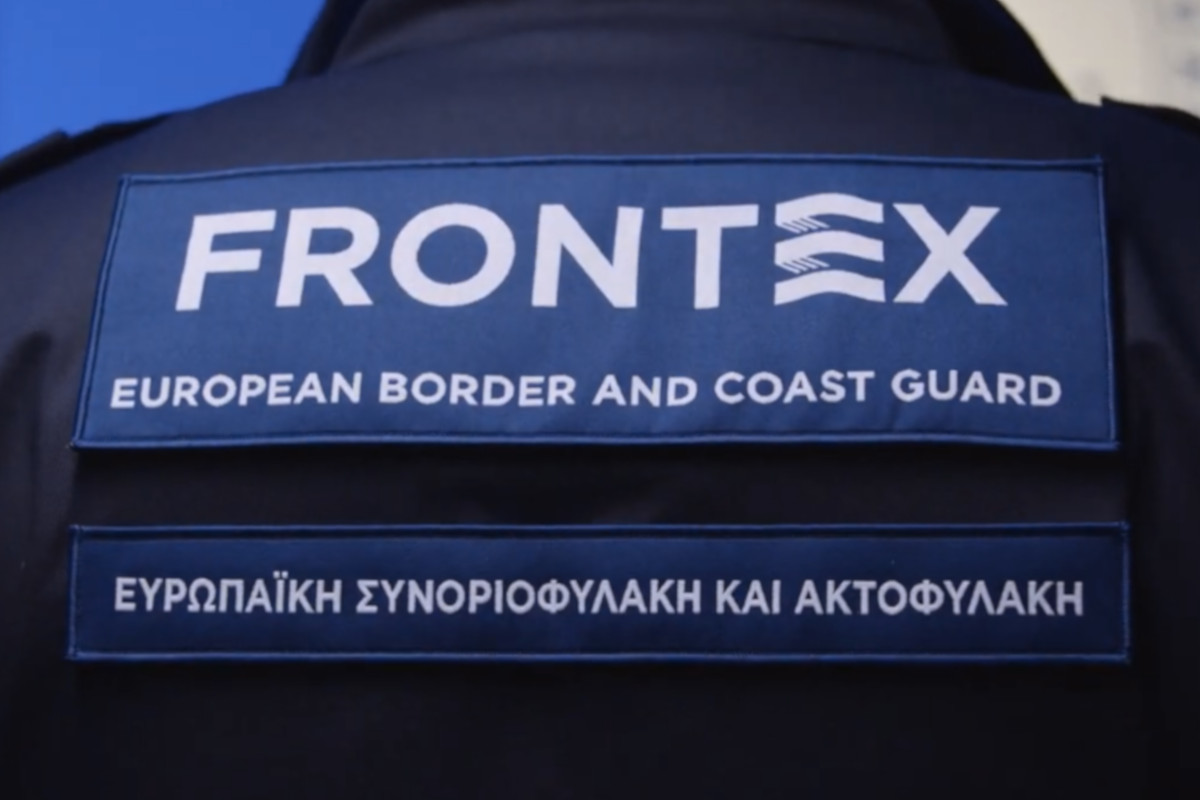
Last Thursday,
the European Parliament's Human Rights Committee (DROI) heard
from a number of speakers on the compliance of Frontex with its
human rights responsibilities. A short video posted on the Parliament's
website shows some of the key comments from the session, of which
the most scathing came from a statement by François Crépeau,
UN Special Rapporteur on the human rights of migrants.
EU: Statewatch
JHA archive now contains 7,705 documents
The archive contains
bibliographic records and full-text documents on EU Justice and
Home Affairs policy dating back to 1976 when the Trevi Group
was set up (Trevi was ad hoc intergovernmental cooperation on
Terrorism, Radicalism and Violence, and grew into formal European
political cooperation in the former Third Pillar after the Maastricht
Treaty). It has been created to allow researchers to chart the
historical development of EU JHA policy. The EU's public register
of Council documents only dates back to 2000 (with some documents
from 1999) while the Commission's incomplete public register
started in 2002.
Recent additions
to the archive include:
Report from the Spanish delegation relating
to migratory fluxes in the area of the Mediterranean (4 September 1996, pdf)
Compilations of replies to the questionnaire
on Somalia
(17 October 1996, pdf)
Draft report on the situation in Iraq (4 December 1996, pdf)
EU: State
guidelines for the exchange of undercover police officers revealed
Statewatch can today publish
a template 'Memorandum of Understanding for the use of undercover
officers' produced by the European Cooperation Group on Undercover
Activities (ECG) in February 2004. It outlines the generic structure
and issues to be covered in agreements for the cross-border deployment
of undercover police officers. This includes the legal framework;
objectives of the deployment; management of the operation; "hard
criteria" such as how evidence may be given in court and
whether carrying a firearm is permitted; and communication with
superiors. While it may simply be coincidence, it is notable
that Mark Kennedy's overseas activities began in the months following
the agreement.
EU: EU
ministers urge Reding to do more for gay rights (euobserver, link) "Fourteen
member states on Thursday (16 May) backed a petition urging the
European Commission to do more for the rights of sexual minorities,
with the last major initiative several years ago."
EU LGBT Survey: Poll on homophobia sparks
concern
(BBC, link) "A quarter of gay people surveyed in a major
EU poll say they have been subjected to attacks or violent threats
in the past five years."
Survey shows widespread LGBT discrimination (Sarah Ludford, link)
"A survey produced by Gallup Europe for the EU Fundamental
Rights Agency (FRA) to mark the forthcoming International Day
Against Homophobia (May 17th) has revealed that almost half (47%)
of the Lesbian, Gay, Transgender and Bisexual community in Europe
has been personally discriminated against or harassed on the
grounds of their sexual orientation."
Northern Ireland: G8: New laws will
allow government to shut down mobile phone network as security
preparations step up a gear
As the G8 summit
in Enniskillen in Northern Ireland draws nearer, it seems that
the security operation surrounding the event will be even more
stringent than those that normally accompany international political
summits.
EU: Implementing
the "solidarity clause": EU secret service to be reinforced?
The "solidarity
clause", known more formally as Article 222 of the Lisbon
Treaty, regulates the use of police, secret service and military
means in case of a crisis within the EU. The EU Commission and
the EU High Representative for Foreign and Security Policy issued
a proposal in December for the legal implementation of the clause.
Spain: Open Access Now: Access
to the Detention centers for foreigners (CIE) of Aluche (Madrid)
denied for NGOs and journalists as part of a delegation with
Members of the European Parliament (link)
"The denial
and the willingness of the government to limit access to only
three MEPs and one parliamentarian of Madrid demonstrate the
opacity surrounding the functioning of detention centers, repeatedly
denounced by civil society, but also by international organizations
and national institutions such as the Ombudsman, the Attorney
General and the Committee for the Prevention of Torture. This
opacity promotes the violation of the rights of detainees in
these centers as these authorities, agencies and organisations
have already shown and make them incompatible with democracy
and the rule of law."
EU: Field
testing: CLOSEYE project puts drones over the Mediterranean
A multi-million euro border control
project was launched in Spain at the end of April that will see
drones, satellites and aerostats deployed over the southern Mediterranean
in an attempt to provide the EU "with an operational and
technical framework that increases situational awareness and
improves the reaction capability of authorities surveying the
external borders of the EU." [1]
UK: Tests
near completion on new police weapon
On top of CS gas, rubber bullets
and Tasers, another "less lethal weapon" that received
renewed interest following the August 2011 riots is now in "the
late stages of Home Office testing", according to a report
in Police Oracle magazine. The Discriminating Irritant
Projectile (DIP) can be fired up to 40 metres from a baton gun
and releases a cloud of CS (tear gas) particles on impact.
From
Countering Financial Crime to Criminalizing Civil Society: How
the FATF Overstepped the Mark (Open Society Foundations, link)
"A powerful
yet unaccountable global standardsetting body is helping
repressive civil society regulations to spread and flourish across
the globe. Ben Hayes lifts the lid on the Financial Action Task
Force."
Statewatch
Journal (volume 23 no 1) now available to download
The Statewatch Journal has been
redesigned and each issue will now have a thematic focus. This
issue looks at the nexus between austerity, democracy and civil
liberties in Europe.
EU: Meijers
Committee note to the European Parliament on the Smart Borders
proposals
(pdf)
The Meijers Committee
advises the members of the European Parliament to vote against
the Smart Borders proposals and expresses deep concerns with
respect to the:
- proportionality
and practical feasibility of the proposals;
- coherence of the proposals with existing databases;
- applicable standards of data protection for the data subjects;
- conditions for transmission of personal data to third countries;
- broad discretion as regards the issuing of the registered traveler
status;
- proposed amendments in the Schengen Borders Code;
- possible access to the Entry/Exit System for law enforcement
purposes.
Smart Borders
proposals:
Proposal
for a Regulation establishing an Entry/Exit System (COM 2013 95, pdf)
Proposal
for a Regulation amending Regulation (EC) No 562/2006
(COM 2013 96, pdf)
Proposal
for a Regulation establishing Registered Traveller Programme
(COM 2013 97, pdf)
See also: Borderline:
The EU's New Border Surveillance Initiatives: Assessing the Costs
and Fundamental Rights Implications of EUROSUR and the "Smart
Borders" Proposals (pdf) A study by the Heinrich
Böll Foundation written by Ben Hayes and Mathias Vermeulen.
EU: Council of the European Union: Data protection: Proposal
for a Regulation on the protection of individuals with regard
to the processing of personal data and on the free movement of
such data (General Data Protection Regulation) - Specific issues (8825/13, pdf)
"This package
comprises two legislative proposals based on Article 16 TFEU,
the new legal basis for data protection measures introduced by
the Lisbon Treaty...The following items are submitted to COREPER
for consideration:
- Material scope
- Territorial scope
- Definition of consent
- Data processing principles
- Freedom of expression and access to public documents."
EU: Data protection: Interoperable
police systems could be unlawfully accessed, warns EU privacy
body
(Out-law, link) European
Data Protection Supervisor opinion on the European Information
Exchange Model (full text, pdf)
"European
Data Protection Supervisor (EDPS) Peter Hustinx, who advises
EU bodies on data privacy issues, said that making systems interoperable
with one another could lead to police databases being used for
different purposes for which they were originally established.
This would run counter to EU data protection laws, he said."
Background:
EU: Commission
rules out new law enforcement databases - but seeks more data
for Europol
EU: Communication
from the Commission to the European Parliament and the Council
Strengthening law enforcement cooperation in the EU: the
European Information Exchange Model (pdf)
EU: Aerial
surveillance at the Greece-Turkey border: Frontex wants to buy
a plane
The EU border
agency, Frontex, is looking to buy a plane that will allow it
to undertake night-time surveillance of the land border between
Greece and Turkey as part of a pilot project that will run from
July until September. Aerial surveillance imagery will be used
to guide the actions of border guards stationed on the ground,
in a region where intensified border controls have already led
to the death of migrants attempting to reach Europe by increasingly
dangerous routes.
State of Civil Society report 2013: How international
rules on countering the financing of terrorism impact civil society (by Ben Hayes, link)
See also: Full
report (pdf)
"This chapter
describes some of the ways in which the work of civil society
organisations continues to be constrained by the global CFT [countering
the financing of terrorism] framework. Although many of these
effects may be described as unintended consequences, they are
also the outcome of a culture of suspicion in which links between
charities and terrorist organisations have been exaggerated while
measures to protect freedom of association and expression have
been disregarded."
UK: Thousands
more Tasers issued to police in London
Police in London are being armed
with an increasing number of "less lethal" weapons.
Taser guns - electroshock weapons that deliver up to 1,200 volts
into the body through metal probes that pierce the skin - are
being made available to hundreds more police officers, leading
to growing unease amongst politicians and the public. Concerns
are being raised over the necessity and likely effectiveness
of an increase in the use of the electroshock weapons, and an
attempt is underway to have the legality of the decision-making
process behind Taser use assessed by the courts.
Top reports and services 2004-2012
See: Resources for researchers:
Statewatch Analyses: 1999-ongoing
EU: Borderline:
The EU's New Border Surveillance Initiatives: Assessing the Costs
and Fundamental Rights Implications of EUROSUR and the "Smart
Borders" Proposals (pdf) A study by the Heinrich Böll Foundation.
Written by Dr. Ben Hayes and Mathias Vermeulen: "Unable
to tackle the root of the problem, the member states are upgrading
the Unions external borders. Such a highly parochial approach
taken to a massive scale threatens some of the EUs fundamental
values - under the pretence that ones own interests are
at stake. Such an approach borders on the inhumane."
Statewatch's
20th Anniversary Conference, June 2011: Statewatch
conference speeches
TNI - Statewatch:
Counter-terrorism,
'policy laundering' and the FATF - legalising surveillance, regulating
civil society
Statewatch publication:
Guide
to EU decision-making and justice and home affairs after the
Lisbon Treaty
(pdf) by Steve Peers, Professor of Law, University of Essex,
with additional material by Tony Bunyan
EU: Major report
from Statewatch and the Transnational Institute:
NeoConOpticon
- The EU Security-Industrial Complex by Ben Hayes (pdf): 235,180+
copies downloaded. Executive Summary (pdf) and NeoConOpticon
blog
SPECIAL STATEWATCH
REPORT: The
Shape of Things to Come - the EU Future Group (Version.1.3) by Tony
Bunyan: 67,134+ copies downloaded. The report calls for a meaningful
and wide-ranging debate before it is too late
for privacy and civil liberties. In the words of the EU Council
presidency: "Every object the individual uses, every
transaction they make and almost everywhere they go will create
a detailed digital record. This will generate a wealth of information
for public security organisations, and create huge opportunities
for more effective and productive public security efforts."
See also ongoing: Statewatch Observatory: The Stockhom
Programme
See: Tony Bunyan's column in
the Guardian: View
from the EU
Statewatch publication:
Border
wars and asylum crimes by Frances Webber (38 pages, pdf): "When
the pamphlet Crimes of Arrival was written, in 1995,
the title was a metaphor for the way the British government,
in common with other European governments, treated migrants and
especially, asylum seekers. Now, a decade on, that title describes
a literal truth.... There is a frightening continuity between
the treatment of asylum claimants and that of terrorist suspects.
In the name of the defence of our way of life and our enlightenment
values from attack by terrorists or by poor migrants, that way
of life is being destroyed by creeping authoritarianism, and
those values amongst which the most important is the universality
of human rights betrayed." See also: Crimes
of arrival: immigrants and asylum-seekers in the new Europe (12 pages, 1995, pdf).
To order hard-copy see: Statewatch Publications
EU: Statewatch
Report: Arming
Big Brother: new research reveals the true costs of Europe's
security-industrial complex by Ben Hayes (pdf, April 2006). The
European Union is preparing to spend hundreds of million on new
research into surveillance and control technologies, according
to Arming Big Brother, a new report by the Transnational Institute
(TNI) and Statewatch. Press
release
(English) Press
release
(Spanish, link) Copy
of full report (English, pdf) Copy
of full report (Spanish, pdf) Hard copies of Arming Big Brother
can be obtained from: The Transnational Institute, please send
an e-mail to: wilbert@tni.org with your request.
Europe: A collection
of "Essays
in defence of civil liberties and democracy" was published
in 2005
Global surveillance:
Global
coalition launch report and international surveillance campaign: Statewatch, with partner
organisations the American Civil Liberties Union (ACLU), Focus
on the Global South, Friends Committee (US) and the International
Civil Liberties Monitoring Group (Canada) today publishes an
in-depth report: "The emergence of a global infrastructure
for registration and surveillance" (20 April, 2005).
Statewatch report: Journalism,
civil liberties and the war on terrorism (full-report/request
printed copy) - Special report by the International Federation
of Journalists and Statewatch including an analysis of current
policy developments as well as a survey of 20 selected countries
in Africa, Asia, Europe, Latin Amercia, the Middle East and the
USA (published World press freedom day, 1 May 2005)
Statewatch
"Scoreboard" on EU counter-terrorism plans (pdf) agreed in the
wake of the Madrid bombings. Our analysis shows that 27 out of
the 57 EU proposals have little or nothing to do with tackling
terrorism - they deal with crime in general and surveillance:
Analysis
in Spanish
(March 2004)
The Statewatch
website
Since its launch this website
has had 13,194,119 user sessions and 89,411,150 "hits"
(December 2012)
In the year
2012 there were 959,237 user sessions and 17,138,956 "hits"
Join Statewatch regular
e-mail list for new stories: Join Statewatch news e-mail list
Statewatch is registered under the
Data Protection Act. Information supplied will be not be passed
to third parties
The Statewatch searchable database
now holds more than 29,000 records
(news, features, analyses and documentation): Search
database
If you use this site regularly,
you are encouraged to make a donation
to Statewatch to support future research.
Statewatch is a non-profitmaking
voluntary group founded in 1991, see: About
Statewatch
Contributions to News online and bulletin are welcomed e-mail:
office@statewatch.org
Statewatch, PO Box 1516, London N16 0EW, UK
UK: tel: 020 8802 1882 fax: 020 8880 1727
International: tel: 00 44 20 8802 1882 fax: 00 44 20 8880
1727
The Statewatch
website is hosted by the Phone Co-op:

Statewatch is
funded by
Friends of Statewatch
Statewatch does not have a corporate
view, nor does it seek to create one, the views expressed are
those of the author. Statewatch is not responsible for the content
of external websites and inclusion of a link does not constitute
an endorsement.
© Statewatch
ISSN 1756-851X. Personal usage as private individuals/"fair
dealing" is allowed. We also welcome links to material on
our site. Usage by those working for organisations is allowed
only if the organisation holds an appropriate licence from the
relevant reprographic rights organisation (eg: Copyright Licensing
Agency in the UK) with such usage being subject to the terms
and conditions of that licence and to local copyright law. |