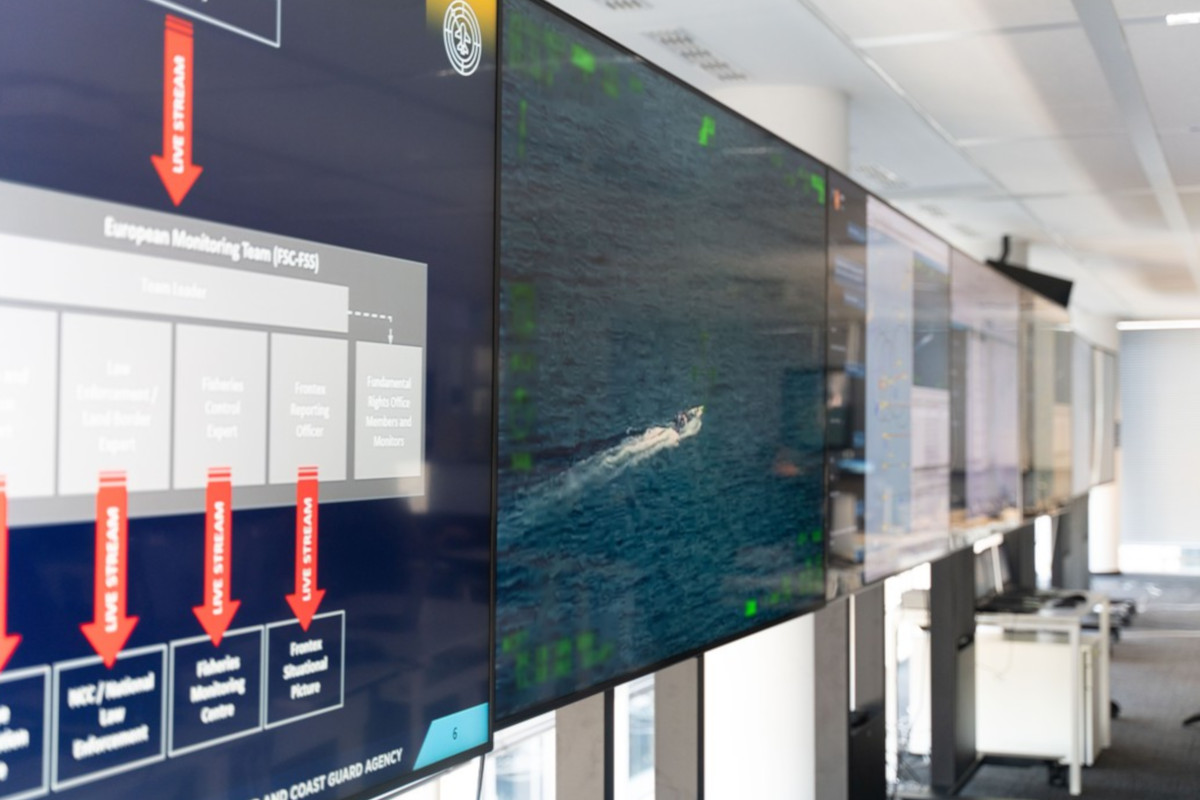
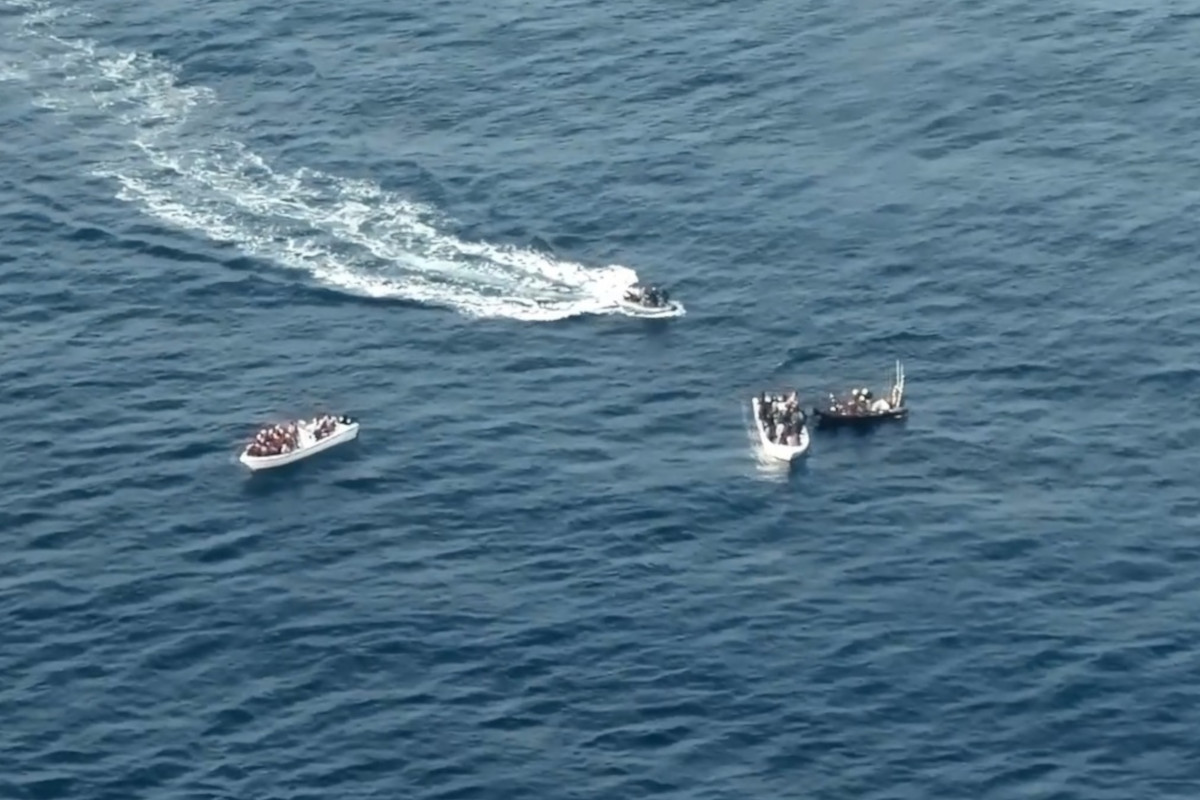
Image: A UK plane that conducts surveillance flights over the Channel (not as part of the Frontex operation). Colin Cooke Photo, CC BY-SA 2.0
Three days after Darmanin’s statement, a Danish air force jet landed in Lille to begin patrols, and Frontex’s Joint Operation (JO) Opal Coast was born. Since then, at least 102 people have died at the border of the UK and mainland Europe, according to journalists and activist reporting; 64 of those deaths were connected with attempted maritime crossings.
Despite the increased number of French search and rescue resources, more people have been dying in the Channel year on year. Alarm Phone attributes this phenomenon to increased overcrowding of the boats, a development driven by French police intercepting equipment such as boats and engines before it can reach the coast, and violently dispersing people during launch attempts. This mean there are fewer boats for the same number of expectant travelers and that launches occur in chaotic circumstances as people attempt to escape the police.
Despite being born out of the deadliest maritime disaster in the Channel since the sinking of the Herald of Free Enterprise in 1987, JO Opal Coast does not prioritise the safety of people’s lives at sea and may even contribute to the increased number of deadly incidents observed recently.
A censored version of Frontex’s 2023 Specific Activity Plan (SAP) for Opal Coast (pdf), obtained through an access to documents request, lists the aims of the aerial surveillance in the following order:
“…to detect and prevent unauthorised border crossings from the Belgian and French coast and from the territorial sea of Belgium towards the United Kingdom.”
“To tackle cross-border crime, including migrants smuggling and trafficking in human beings.”
“To enhance European cooperation on coast guard functions as well as to support SAR in accordance with international law.”
Further evidence of the low priority given to search and rescue operations can be seen in the flight records of the surveillance aircraft deployed by Frontex.
As previously reported by Statewatch, amongst the companies supplying aircraft to Opal Coast are Executive Airborne Systems & Platforms (EASP) from the Netherlands, which was contracted in 2022. A track of its Dornier DO328-100 from July that year shows the surveillance is overland in France, and takes place in the middle of the night.
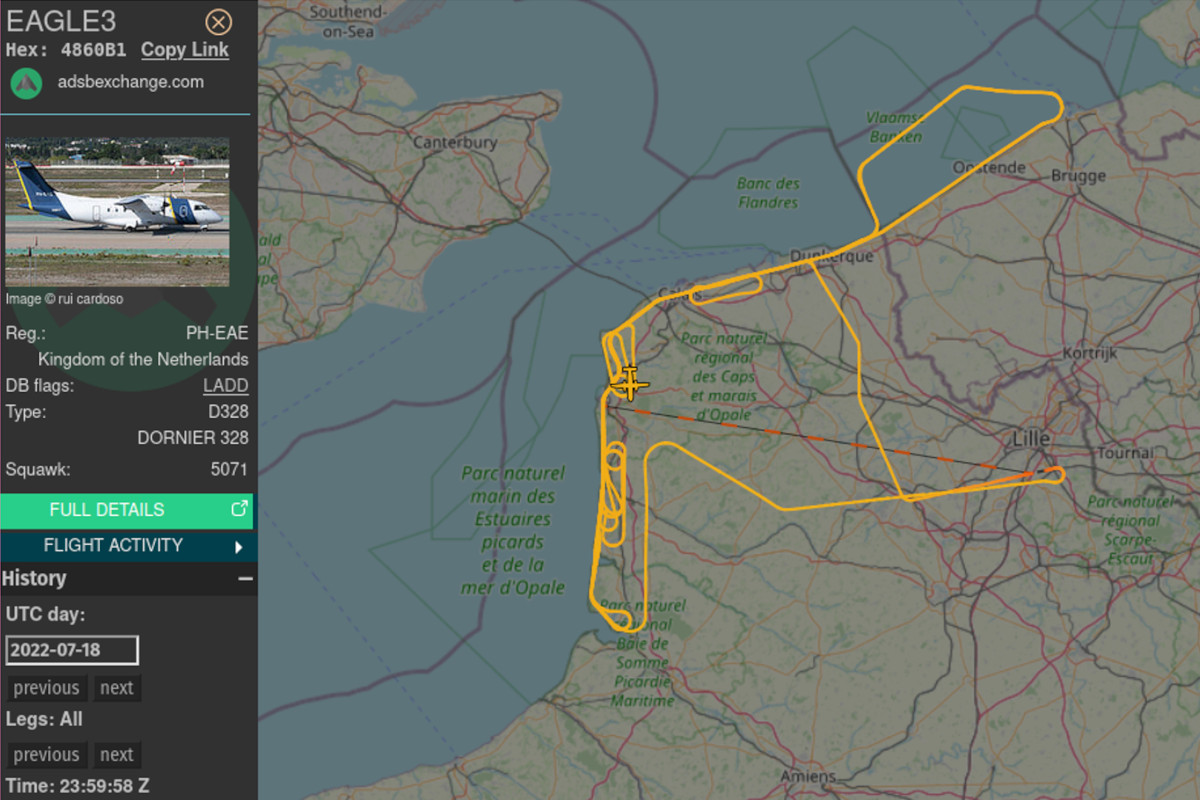
The plane primarily travelled over areas of dunes along the coast, where groups of people gather or bring equipment prior to attempting crossings, making it possible to direct police to intercept them.
The Frontex document describes this activity as:
“Early detect, report and track suspicious groups of persons and/or transportation means suspected of carrying persons and in possession of any equipment which may facilitate sea crossings in order to prevent unauthorised border crossings from [REDACTED] towards the United Kingdom…”
The plane does not regularly fly search patterns over the Channel in the mornings, when the majority of departures occur.
More recent flights in 2024 by Belgian company North Sea Aviation Services (which formerly flew surveillance flights for the UK’s HM Coastguard before 2Excel Aviation took over) show the continuation of this night time, overland patrol pattern which continues to be replicated today.
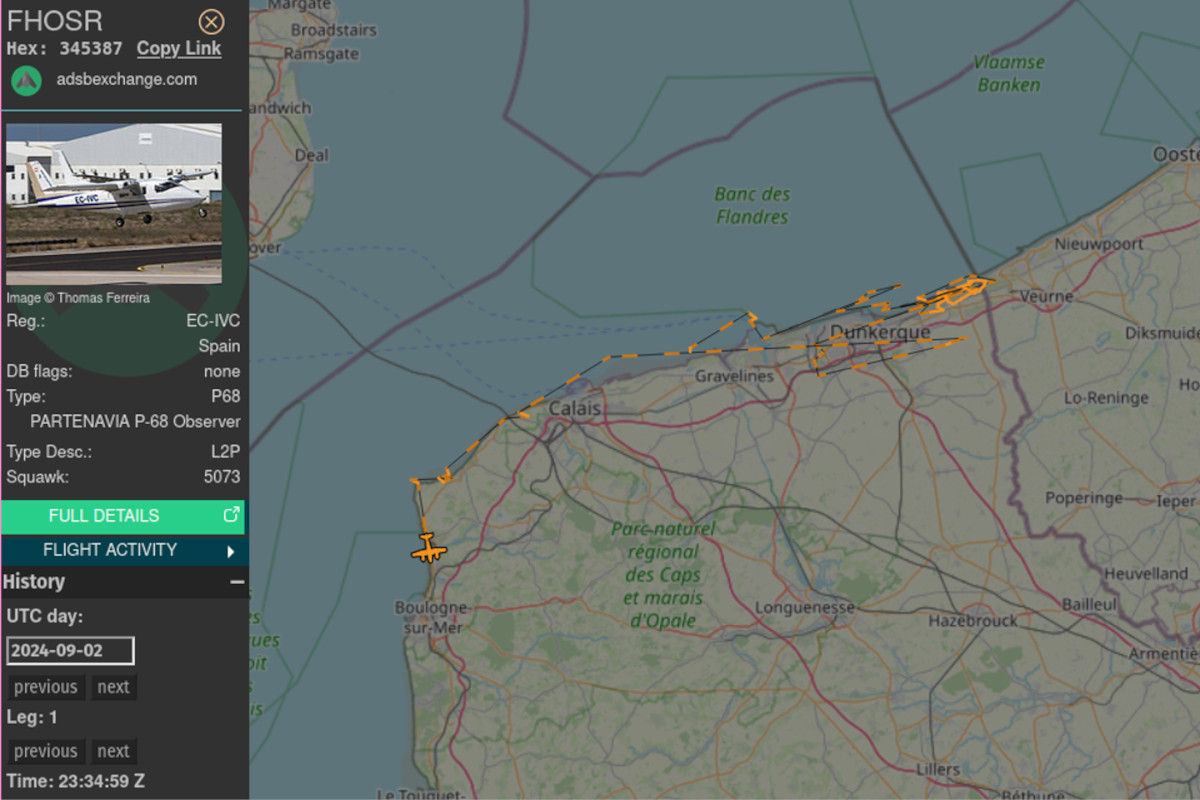
Notably, the track from a surveillance plane provided by Spain’s GrupAirmed on 2 and 3 September this year shows that it only patrolled the coast in the middle of that night.
On the morning of 3 September the deadliest shipwreck in the Channel since November 2021 occurred near Cap Gris-Nez. At least 14 people died.
Frontex acknowledges in the Opal Coast plan that the “risk taken by migrants in their attempts to cross the Channel is high,” but goes on to say that “the number of reported fatalities in the area is low compared to other maritime routes used by irregular migrants.”
Just as in the Mediterranean, where Frontex’s aerial surveillance facilitates abuse while paying lip-service to assisting with search and rescue operations, the agency’s activity over the Channel serves to enable the police interceptions which have made crossings more dangerous.
Documentation
- Frontex, Specific Activity Plan JO OPAL COAST 2023 (pdf)
Author: Travis Van Isacker